£36.00
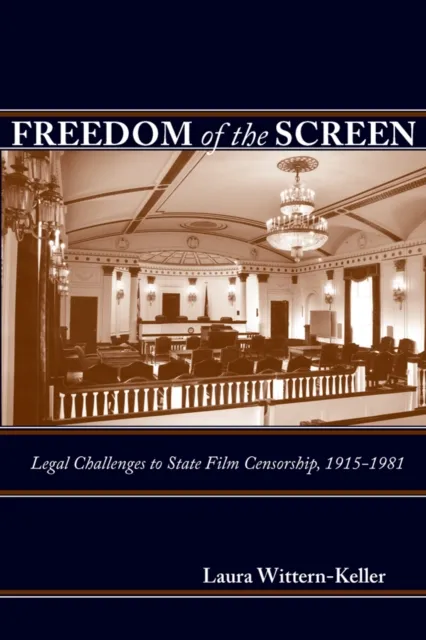
Freedom of the Screen
Legal Challenges to State Film Censorship, 1915-1981

Introduction
At the turn of the twentieth century, the proliferation of movies attracted not only the attention of audiences across America but also the apprehensive eyes of government officials and special interest groups concerned about the messages disseminated by the silver screen. Between 1907 and 1926, seven states -- New York, Pennsylvania, Ohio, Virginia, Kansas, Maryland, and Massachusetts -- and more than one hundred cities authorized censors to suppress all images and messages considered inappropriate for American audiences. Movie studios, hoping to avoid problems with state censors, worrying that censorship might be extended to the federal level, and facing increased pressure from religious groups, also jumped into the censoring business, restraining content through the adoption of the self-censoring Production Code, also known as the Hays code.
Legal Challenges and Evolution
But some industry outsiders, independent distributors who believed that movies deserved the free speech protections of the First Amendment, brought legal challenges to censorship at the state and local levels. Freedom of the Screen chronicles both the evolution of judicial attitudes toward film restriction and the plight of the individuals who fought for the right to deliver provocative and relevant movies to American audiences. The path to cinematic freedom was marked with both achievements and roadblocks, from the establishment of the Production Code Administration, which effectively eradicated political films after 1934, to the landmark cases over films such as The Miracle (1948), La ronde (1950), and Lady Chatterley's Lover (1955) that paved the way for increased freedom of expression.
Progress and Impact
As the fight against censorship progressed case by case through state courts and the U.S. Supreme Court, legal authorities and the public responded, growing increasingly sympathetic toward artistic freedom. Because a small, unorganized group of independent film distributors and exhibitors in mid-twentieth-century America fought back against what they believed was the unconstitutional prior restraint of motion pictures, film after 1965 was able to follow a new path, maturing into an artistic medium for the communication of ideas, however controversial. Government censors would no longer control the content of America’s movie screens.
Author and Significance
Laura Wittern-Keller's use of previously unexplored archival material and interviews with key figures earned her the researcher of the year award from the New York State Board of Regents and the New York State Archives Partnership Trust. Her exhaustive work is the first to discuss more than five decades of film censorship battles that rose from state and local courtrooms to become issues of national debate and significance. A compendium of judicial action in the film industry, Freedom of the Screen is a tribute to those who fought for the constitutional right of free expression and paved the way for the variety of films that appear in cinemas today.