£44.99
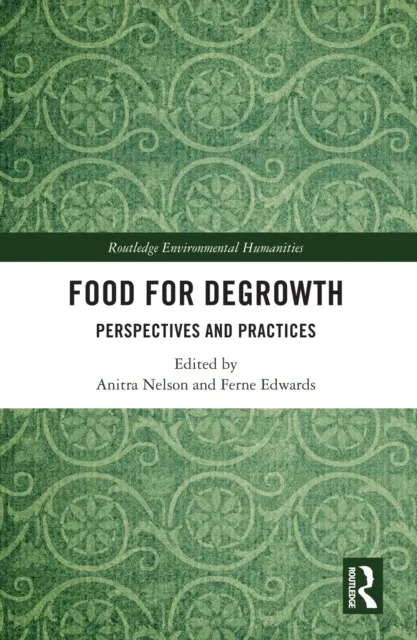
Food for Degrowth
Perspectives and Practices

This collection breaks new ground by investigating applications of degrowth in a range of geographic, practical and theoretical contexts along the food chain. Degrowth challenges growth and advocates for everyday practices that limit socio-metabolic energy and material flows within planetary constraints. As such, the editors intend to map possibilities for food for degrowth to become established as a field of study.
International contributors offer a range of examples and possibilities to develop more sustainable, localised, resilient and healthy food systems using degrowth principles of sufficiency, frugal abundance, security, autonomy and conviviality. Chapters are clustered in parts that critically examine food for degrowth in spheres of the household, collectives, networks, and narratives of broader activism and discourses. Themes include broadening and deepening concepts of care in food provisioning and social contexts; critically applying appropriate technologies; appreciating and integrating indigenous perspectives; challenging notions of waste, circular economies and commodification; and addressing the ever-present impacts of market logic framed by growth.
This book will be of greatest interest to students and scholars of critical food studies, sustainability studies, urban political ecology, geography, environmental studies such as environmental sociology, anthropology, ethnography, ecological economics and urban design and planning.