$56.99
$91.99
Fault Lines of Globalization
Legal Order and the Politics of A-Legality

The Question of Boundaries in Legal Orders
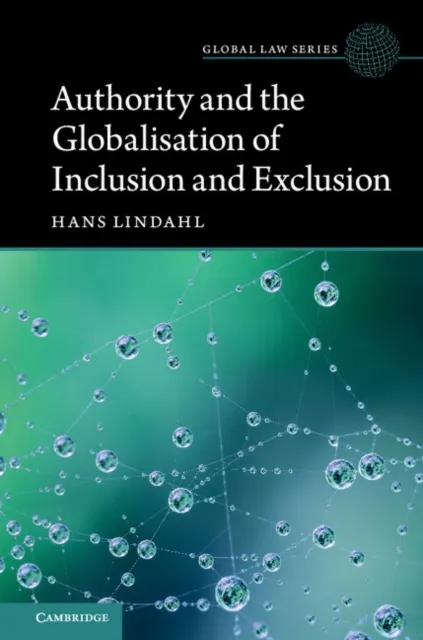
The question whether and how boundaries might individuate and thereby be constitutive features of any imaginable legal order has yet to be addressed in a systematic and comprehensive manner by legal and political theory. This book seeks to address this important omission, providing an original contribution to the debate about law in a global setting. Against the widely endorsed assumption that we are now moving towards law without boundaries, it argues that every imaginable legal order, global or otherwise, is bounded in space, time, membership, and content.
Main Insights of the Book
The book is built up around three main insights. Firstly, that legal orders can best be understood as a form of joint action in which authorities mediate and uphold who ought to do what, where, and when with a view to realising the normative point of acting together. Secondly, that behaviour can call into question the boundaries that determine who ought to do what, where and when: a-legality. Thirdly, that this a-legality reveals boundaries as marking a limit and, to a lesser or greater extent, a fault line of the respective legal order.
Legal Boundaries and Their Significance
Legal boundaries reveal ways of ordering the who, what, where, and when of behaviour which have been excluded, yet which remain within the range of practical possibilities accessible to the collective: limits. However, legal boundaries also intimate an order which exceeds the range of possibilities accessible to that collective — the fault line of the respective legal order.
Validation and Broader Implications
Careful analysis of a wide range of legal orders, including nomadism, Roman law, classical international law, ius gentium, multinationals, cyberlaw, lex mercatoria, the EU, global regimes of human rights, and space law validates this thesis. What sense, then, can we make of the normativity of the law, if there can be no inclusion without exclusion? Arguing that legal and political theories misunderstand how legal boundaries do their work of including and excluding, the book develops an normative theory of legal order which is alternative to both communitarianism and cosmopolitanism.