£129.99
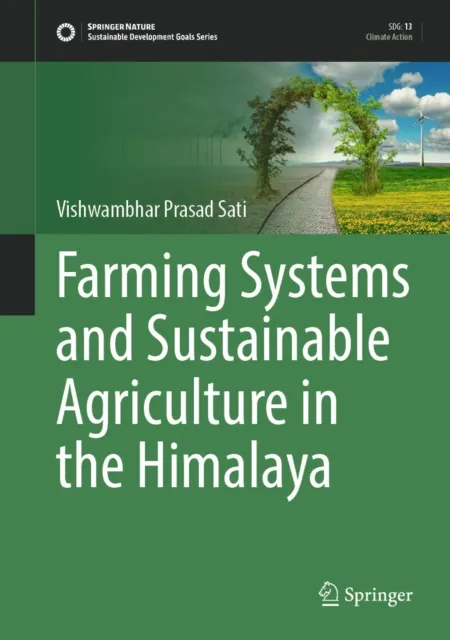
Farming Systems and Sustainable Agriculture in the Himalaya

Introduction
The farming system in the Central Himalayan Region is distinctive and unique, mainly focusing on the cultivation of traditional subsistence cereal crops. The agrobiodiversity in this region is rich, with the Central Himalaya growing numerous cultivars and crop races. The practice of cultivating many crops or cultivars in a single field is known as the Barahnaja System. Another peculiar system is the Sar/Sari system, where different crops grow in the two Sars during the same seasons, with one Sar left fallow for six months while the other grows crops.
Farming Methods and Recent Changes
This century-old farming method involves plowing fields with oxen and using organic manure to enhance crop production and productivity. However, recent changes have been observed in the farming systems. The area under traditionally growing millets is declining. In river valleys and middle altitudes, there is a recent trend towards cultivating paddy and wheat. Unfortunately, the cultivation of temperate fruits – apple and citrus has seen a decline in terms of area, production, and productivity.
Factors Influencing Farming Systems
Various factors are influencing farming systems in the Central Himalaya, such as high climate variability and change, decreasing crop production and productivity, evolving food habits, and out-migration.
Contents of the Book
The book contains 12 chapters illustrating introduction, land use and land cover change, cropping patterns, crop diversity and agro-ecological zones, farming systems and sustainable agriculture, climate change and its impact on agriculture, infrastructural facilities for sustainable agriculture, declining agriculture: a case study, crop productivity and suitability analyzes, agribusiness, policies and planning for sustainable agriculture, and conclusions. It serves as a valuable resource for students, academicians, researchers, policymakers, and farmers.