£51.99
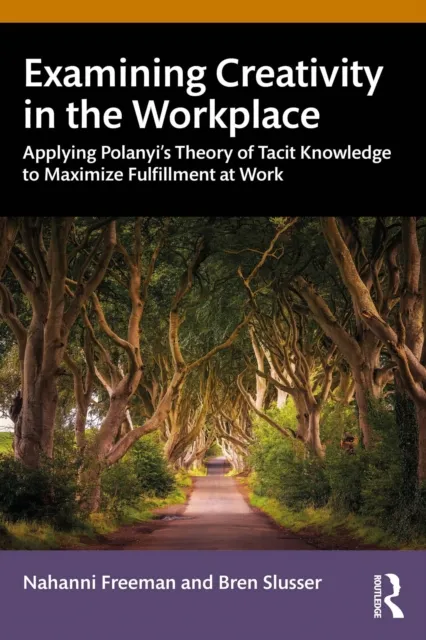
Examining Creativity in the Workplace
Applying Polanyi’s Theory of Tacit Knowledge to Maximize Fulfillment at Work

Overview
This scholarly book explores the intersection of social cognition with a democratic philosophy of human resource management to advance a theory of workplace function that maximizes creativity. It examines how the work of Polanyi on tacit knowledge provides a useful theoretical structure for understanding person perception and self‑fulfilling prophecy effects in the workplace, with a focus on gender, culture, and race as diversity variables. Based on a broad range of interdisciplinary empirical evidence and theories, this book provides a foundational set of concepts to build new applied intervention strategies. The authors create new, testable theories based on a synthesis of several major areas of research in social psychology and human resource management, moving beyond the narrow confines of trends in a particular subdomain.
Part 1: Literature Review
Part 1 offers a literature review of the field, ranging from theoretical, historical, and philosophical psychology to social psychology and neurocognition. Each chapter in this section offers a novel theory that is pertinent to workplace innovation, synthesized from existing evidence.
Part 2: Applications
Part 2 reveals applications of tacit knowledge to the field of human resource management, with a focus on cross‑cultural applications for low‑ and high‑power distance settings.
Conclusion
This insightful text presents the authors’ original, qualitative research around workplace creativity and tacit knowledge and is valuable reading for scholars and advanced students in industrial‑organizational psychology and human resource management.