£50.99
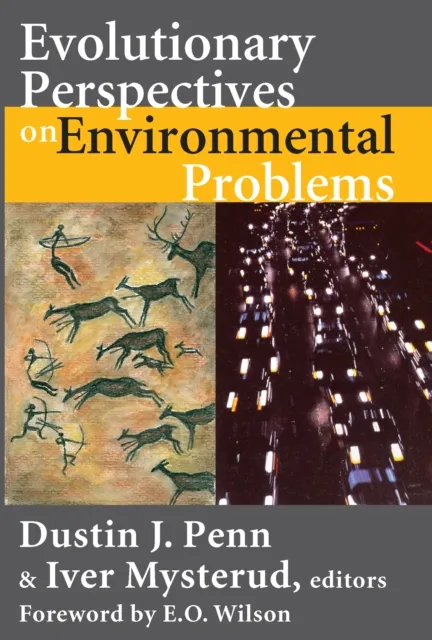
Evolutionary Perspectives on Environmental Problems

Environmental Problems in the Twenty-First Century
The twenty-first century presents an increasing number of environmental problems, including toxic pollution, global warming, destruction of tropical forests, extinction of biological diversity, and depletion of natural resources. These environmental problems are generally due to human behavior, namely over-consumption of resources and overpopulation. Designing effective policies to address these problems requires a deep understanding of human behavior as well as ecology. This in turn requires considerations of human nature, and the evolutionary "design" of the human mind.
Implications of Evolutionary Research for Environmental Sciences
Evolutionary research on human behavior has profound implications for the environmental sciences. The aim of this collection is to bring together a variety of chapters that show how and why.
Part 1: Human Nature and Resource Conservation
Addresses environmental problems from different evolutionary perspectives.
Part 2: The Ecological Noble Savage Hypothesis
Examines the notion that our environmental problems are due to Western culture, and that our ancestors and people in indigenous societies lived in harmony with nature until the corrupting influences of Western culture.
Part 3: The Tragedy of the Commons
Explores the conservation of common-pool or open-access natural resources, such as fisheries, forests, grazing lands, freshwater, and clean air.
Part 4: The Evolution of Discounting and Conspicuous Consumption
Looks at the problem of explaining why people are so ecologically short-sighted and why people in developed countries consume so many resources.
Part 5: Overpopulation and Fertility Declines
Addresses the evolution of human reproductive decisions.
Part 6: Biophilia
Aims to explain why people cherish nature as well as destroy it.
The goal of this volume is to introduce environmental thinkers to evolutionary perspectives on human behavior, and the new interdisciplinary sciences of evolutionary psychology and behavioral ecology. This reader aims to help bridge