£3.99
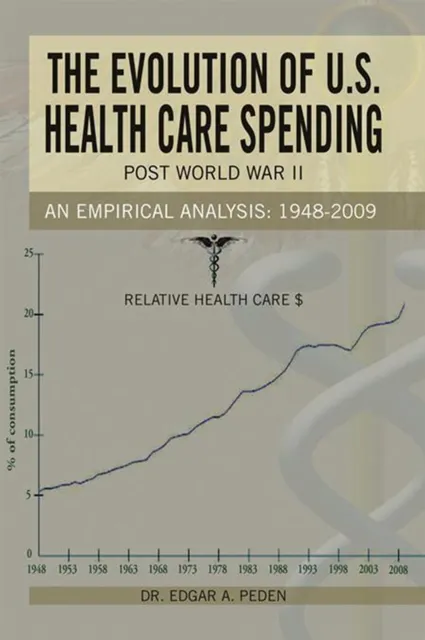
Evolution of U.S. Health Care Spending Post World War Ii
An Empirical Analysis: 1948-2009

Health Care Spending in America
In 1948 Americans spent five percent of total consumption on health care. Six decades later (2009) this had risen to twenty-one percent. What happened? Why did the percentage continue to grow? And given current factors and trajectories, this probably will continue in the foreseeable future. The problem is that a larger health care percentage results in a smaller percentage of other valued consumption: housing, food, education, transportation, and so on. Finally, add health care's bureaucratic burden. Often getting health care seems more like an Inquisition than purchasing products and services from friendly merchants and medical providers.
Addressing these concerns, this study examines the post-war economic history of health care spending, using evolutionary economic theory and an econometric model analyzing 1948–2009 data. Important causes of health care spending growth include: 1. the initial rule change permitting employers to exclude employee health insurance premiums from taxation, 2. a feedback pattern wherein greater insurance generates greater spending, which then generates greater insurance demand, 3. a growing federal presence, such as the Medicare and Medicaid programs, and 4. the rise of both private and public managed care services.
With an ever-growing percentage of health care dollars paid by insurance, it is becoming ever-more bureaucratic, with rules governing every aspect of health care practices. The conundrum is how to get those consuming health care to become more responsible, while providing a safety net for everyone needing health care, even for those without an ability to pay. The Conclusion discusses these issues.