£45.99
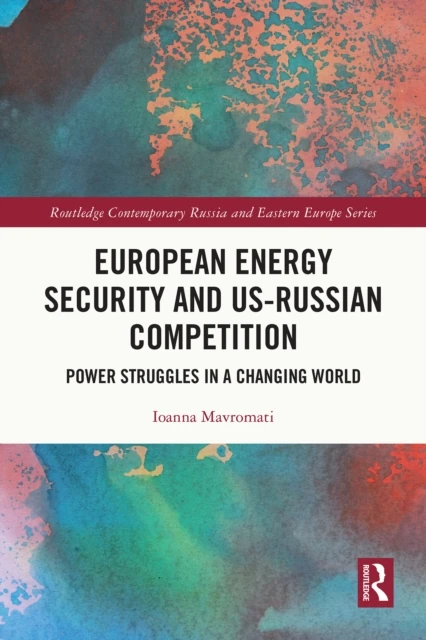
European Energy Security and US-Russian Competition
Power Struggles in a Changing World

Introduction
This book argues that the influence of US-Russian security competition on the energy policies of EU member states and on the development of a unified European energy security policy has been significantly underestimated. While most previous studies have focused on internal EU dynamics and the role of Russian interests, this work takes a broader perspective by examining how transatlantic rivalries have shaped European approaches to energy security.
By tracing the evolution of European energy security policy from the Cold War era through the present, the book connects shifts in policy to the changing dynamics of US-Soviet and later US-Russian energy competition. It demonstrates that, after the Soviet Union's collapse, the United States did not initially view European reliance on Russian energy as a threat. However, as US-Russian competition intensified, Washington increasingly framed Europe's dependence on Russian gas as a security risk and actively sought to block the expansion of Russian energy infrastructure into Europe.
Historical Context and Policy Development
The book also explores how, despite the EU's early treaties being energy-focused, energy security only became a central foreign policy concern for the Union in the mid-2000s. Ultimately, the author argues that scholars of international relations must consider both great power dynamics and intra-European factors to fully understand the development of European energy policy.
Target Audience
The book will be of interest to students and researchers in geopolitics, international relations, energy politics, regional studies, and European studies.