£54.99
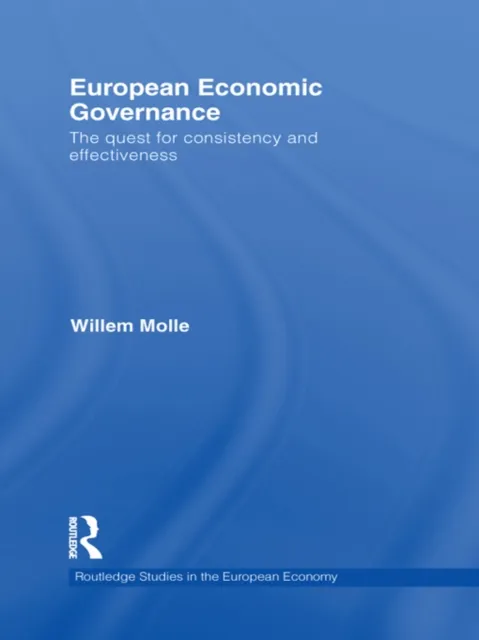
European Economic Governance
The quest for consistency and effectiveness

Introduction
In the course of its development the EU has had to deal with an expanding policy agenda, covering ever more subjects and an increased diversity of instruments. It has also had to deal with an increased number of member states and an extended range of partners (regional authorities, non governmental organisations). These developments have greatly increased the risk of inconsistencies between the various policies pursued and between the various levels of competence for the same policy. Inconsistent policies are less effective than they ought to be. So, they imply a welfare loss.
Governance and Policy Challenges
The EU has tried to cope with the challenge of consistency by adapting its governance. Traditionally it uses mainly the regulatory method. The effectiveness of this method has recently come into question. So alternative methods are now favoured. One is the financial method; which implies more expenditure via the EU budget. The other is coordination. The application of both methods has certain advantages and disadvantages. The problem for policy makers is then to determine the choice between the modes first and the optimal level of budgetary and coordination efforts next. Notwithstanding its obvious policy relevance the problem has got little attention from academia.
Purpose of the Book
This book sets out to contribute to a solution by following two approaches. The first is a systematisation of the theoretical and conceptual underpinnings of the financial and coordination methods. The second is an empirical investigation into a range of European policy processes, implying to different degrees budgetary outlays and coordination.