£69.99
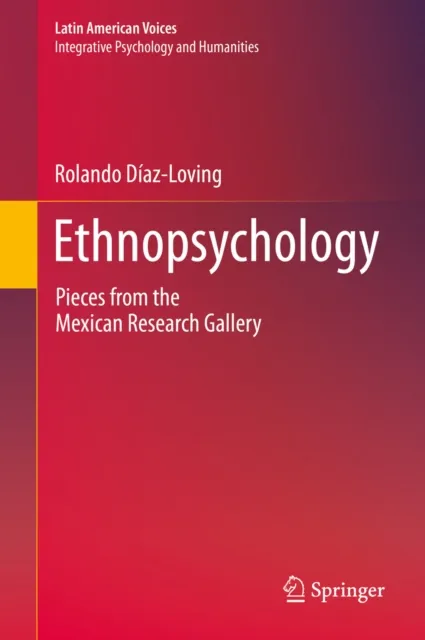
Ethnopsychology
Pieces from the Mexican Research Gallery

Overview of Mexican Ethnopsychology
This book presents an overview of Mexican ethnopsychology, an original theoretical and methodological approach that seeks to complement the mainstream psychological science – based on universal principles, processes and constructs – with scientific methods to study the idiosyncratic features and behaviors typical of specific cultural groups. It proposes a historic-bio-psycho-socio-cultural theoretical model to describe research findings of social, psychological, collective and individual phenomena.
Current Challenges in Psychology
Psychology is at a crossroads of years of research with stress on internal validity and little attention to contextual and cultural variables. It becomes fundamental to continue on the internal validity track but at the same time incorporate external validity issues. The growth of indigenous movements and data allows for a profound evaluation of the extents to which apparent universal phenomena are truly universal, and to what extent they are idiosyncratic manifestations of the cultures where the mainstream research is conducted.
Mexican Ethnopsychology in the International Context
Mexican ethnopsychologists have been following this path for decades, since the pioneer work of Rogelio Díaz-Guerrero, but until now little has been published in English about this innovative theoretical approach. Ethnopsychology – Pieces from the Mexican Research Gallery fills this gap by presenting the international community an overview of Mexican ethnopsychology and thus providing a useful tool to behavioral, social and health scientists interested in understanding how culture shapes both collective and individual behaviors.