£44.99
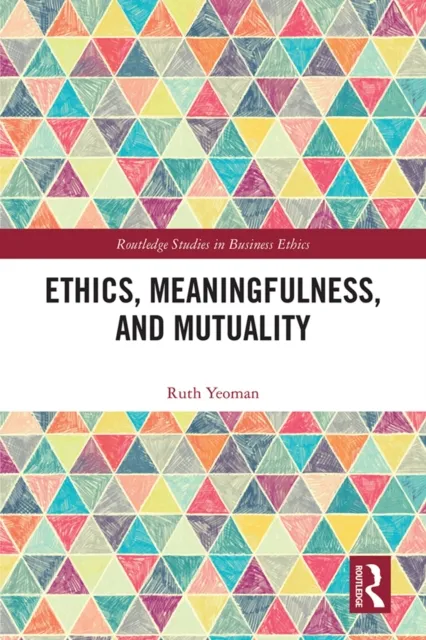
Ethics, Meaningfulness, and Mutuality

There is an urgent need to understand how private and public organisations can play a role in promoting human values such as fairness, dignity, respect and care. Globalisation, technological advance and climate change are changing work, organisations and systems in ways which foster inequality, alienation and collective risk. Against this backdrop, organisations are being urged to make their contribution to the common good, take account of the interests of multiple stakeholders, and respond ethically as well as efficiently to complex challenges which transcend traditional organisational and state boundaries.
Ethics, Meaningfulness, and Mutuality poses critical questions related to organisational design by challenging limits to current thinking, such as the neglect by political philosophers of markets, firms and stakeholders, or by organisational theorists of business ethics. In so doing, the book advances our understanding of the theory and practice of ethical organising. Specifically, meaningfulness and mutuality will be used to yield values and principles for a philosophy of ethical organising which includes an account of human values in morally desirable collective action, and examines the relationship of collective action to the contested concept of shared value creation. Within a philosophy of ethical organising, mutuality permits an examination of the unavoidable relational nature of collective action, whereas meaningfulness addresses fundamental human concerns for significance and leading a life we have reason to value.
By addressing our status as relational beings with human needs for meaning, a philosophy of ethical organising brings critical thinking to the creation of morally informed organisational practices which are not only instrumentally beneficial for addressing wicked problems, but are normatively desirable for human flourishing.