£47.59
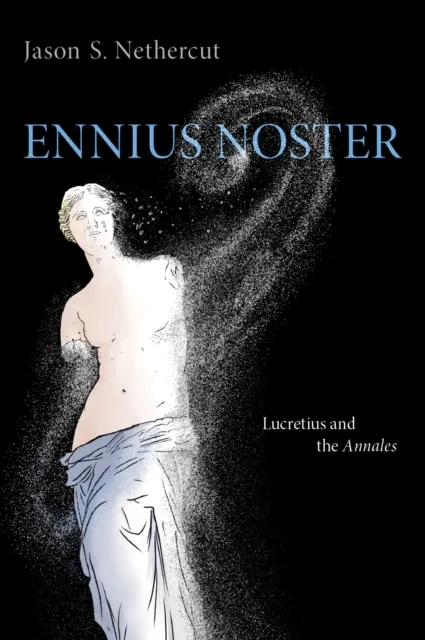
Ennius Noster
Lucretius and the Annales

Consensus and Disagreement
Consensus holds that Lucretius admired the literary prestige of Homeric epos, the form that Ennius famously introduced to Latin literature. However, some hold that Lucretius disagreed with Ennius'' quasi-Pythagorean claim to be Homer reborn, and so uniquely qualified to adapt Homeric poetry to the Latin language.
Reception of Ennius and the De Rerum Natura
Likewise, received wisdom holds that Lucretius followed in the path of poets writing in the wake of Ennius'' Annales, most of whom employed an Ennian style. However, throughout the De Rerum Natura, Lucretius'' use of Ennius'' Annales as a formal model for a long discursive poem in epic meter was neither inevitable nor predictable, on the one hand, nor meaningful in the simple way that critical consensus has always maintained.
Jason Nethercut's Perspective
Jason Nethercut posits that Lucretius selected Ennius as a model precisely to dismantle the values for which he claimed Ennius stood, including the importance of history as a poetic subject and Rome''s historical achievement in particular. As the first book to offer substantial analysis of the relationship between two of the ancient world''s most impactful poets, Ennius Noster: Lucretius and the Annales fills an important gap not only in Lucretian scholarship, but also in our understanding of Latin literary history.