£24.00
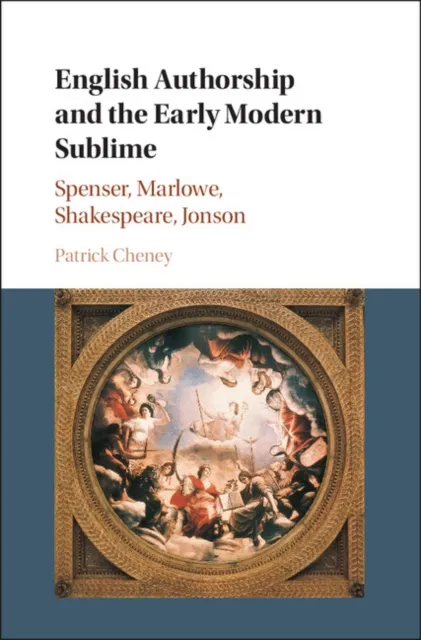
English Authorship and the Early Modern Sublime
Spenser, Marlowe, Shakespeare, Jonson

Patrick Cheney's New Book
Places the sublime at the heart of poems and plays in late sixteenth- and early seventeenth-century England. Specifically, Cheney argues for the importance of an early modern sublime to the advent of modern authorship in Spenser, Marlowe, Shakespeare, and Jonson.
Chapters feature a model of creative excellence and social liberty that helps explain the greatness of the English Renaissance. Cheney's argument revises the received wisdom, which locates the sublime in the eighteenth-century philosophical subject.
The book demonstrates that canonical works like The Faerie Queene and King Lear reinvent sublimity as a new standard of authorship. This standard emerges not only in rational, patriotic paradigms of classical and Christian goodness but also in the eternizing greatness of the author's work: free, heightened, ecstatic.
Playing a centralizing role in the advent of modern authorship, the early modern sublime becomes a catalyst in the formation of an English canon.