£215.00
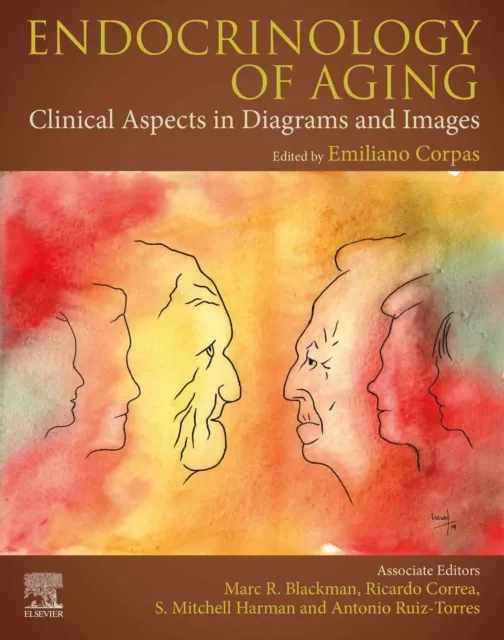
Endocrinology of Aging
Clinical Aspects in Diagrams and Images

According to the United Nations
The number of people aged 60 years or over in the world is projected to be 1.4 billion in 2030 and 2.1 billion in 2050. Endocrinologists and other clinicians face the challenge of caring for the elderly. To do so, they need to incorporate geriatric principles into their clinical practice.
About the Book
Endocrinology of Aging: Clinical Aspects in Diagrams and Images presents chapters in a way that allows the reader to incorporate concepts and main facts of complex subjects in a visual way. As the global population becomes older, the need for a deeper understanding of geriatric pathology increases, and with it, the access to educational resources for the endocrinology and metabolism of aging.
Chapter Structure
Chapters divided according to specific endocrine and metabolic systems, providing evidence-based content regarding what is known about the function of endocrine and metabolic systems altered during the aging process.
Physiological Changes
Addresses physiological changes that alter the pathophysiology of the clinical picture, explaining the characteristic pathological expressions of hormonal and metabolic disorders in the advanced age.
Authors and Editors
Editors and authors are clinical endocrinologists, geriatricians, internists and endocrine surgeons, with extensive global experience in clinical and experimental gerontology.
Patient Transition
Considers the patient transitioning from young adult to elderly, discussing the endocrinological challenge to discern physiology from pathology.
Focus and Features
Focuses on age as an essential factor for diagnostic and endocrine management. Includes many pictures and diagrams, making it a user-friendly reference guide for practicing physicians.