£43.99
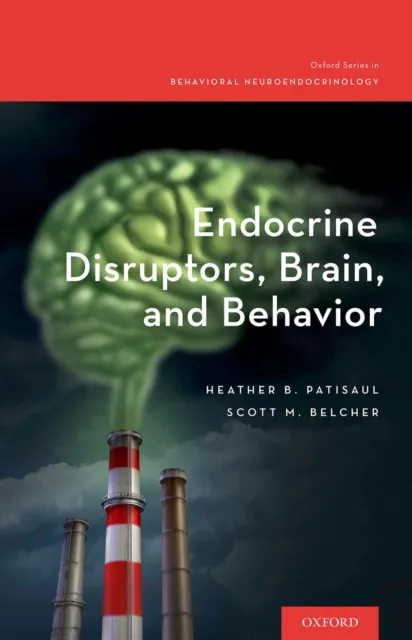
Endocrine Disruptors, Brain, and Behavior

Our world and bodies are becoming increasingly polluted with chemicals capable of interfering with our hormones and thus, possibly, our present and future neural and mental health.
As authors Heather Patisaul and Scott Belcher outline, there is a large lack of data and evidence in this causal relationship, which begs a need for further study to accelerate progress in the endocrinology and neuroendocrinology fields. Endocrine Disruptors, Brain, and Behavior focuses on if and how these chemicals, known as endocrine disrupting compounds (EDCs), affect the development and function of the brain and might be contributing to neural disorders rapidly rising in prevalence.
The book provides an overall synthesis of the EDC field, including its historical roots, major hypotheses, key findings, and research gaps. The authors explain why even the concept of endocrine disruption is controversial in some circles, how differing definitions of endocrine disruption and what constitutes an "adverse" outcome on the brain shape public policy, and where the current capacity by different stakeholders (industry, academia, regulatory agencies) to evaluate chemicals for safety in a regulatory context begins and ends.
The book concludes with suggestions for future research needs and a summary of emerging technology which might prove capable of more effectively evaluating existing and emerging chemicals for endocrine disrupting properties. As such, it provides the context for interdisciplinary and innovative input from a broad spectrum of fields, including those well-schooled in neuroscience, evolutionary biology, brain, behavior, sex differences, and neuroendocrinology.