£13.19
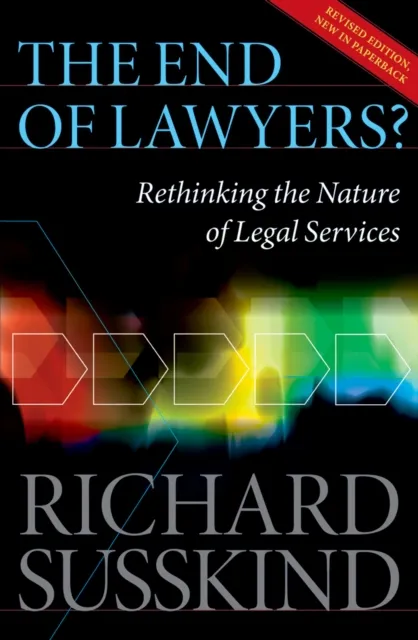
End of Lawyers?
Rethinking the nature of legal services

Sequel to The Future of Law
In this much anticipated sequel to the legal bestseller, The Future of Law, Susskind lays down a challenge to all lawyers to ask themselves, with their hands on their hearts, what elements of their current workload could be undertaken differently - more quickly, cheaply, efficiently, or to a higher quality - using alternative methods of working.
The challenge for legal readers is to identify their distinctive skills and talents, the capabilities that they possess that cannot, crudely, be replaced by advanced systems or by less costly workers supported by technology or standard processes, or by lay people armed with online self-help tools.
It is argued that the market is increasingly unlikely to tolerate expensive lawyers for tasks (guiding, advising, drafting, researching, problem-solving, and more) that can equally or better be discharged, directly or indirectly, by smart systems and processes.
It follows, the book claims, that the jobs of many traditional lawyers will be substantially eroded and often eliminated. This is where the legal profession will be taken, it is argued, by two forces: by a market pull towards commoditisation and by pervasive development and uptake of information technology.
At the same time, the book foresees new law jobs emerging which may be highly rewarding, even if very different from those of today.