£17.49
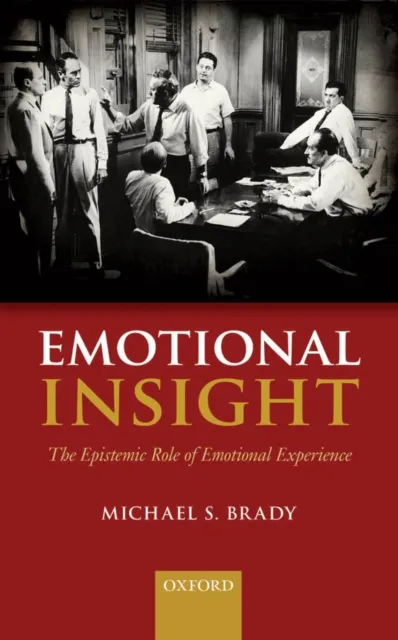
Emotional Insight
The Epistemic Role of Emotional Experience

Introduction
Michael S. Brady presents a fresh perspective on how to understand the difference that emotions can make to our lives. It is a commonplace that emotions can give us information about the world: we are told, for instance, that sometimes it is a good idea to listen to our heart when trying to figure out what to believe.
The Role of Emotions in Understanding Value
In particular, many people think that emotions can give us information about value: fear can inform us about danger, guilt about moral wrongs, pride about achievement. But how are we to understand the positive contribution that emotions can make to our beliefs in general, and to our beliefs about value in particular? And what are the conditions in which emotions make such a contribution?
About the Book
Emotional Insight aims to answer these questions. In doing so it illuminates a central tenet of common-sense thinking, contributes to an on-going debate in the philosophy of emotion, and illustrates something important about the nature of emotion itself. For a central claim of the book is that we should reject the idea that emotional experiences give us information in the same way that perceptual experiences do.
The Perceptual Model and the Epistemological Account
The book rejects, in other words, the Perceptual Model of emotion. Instead, the epistemological story that the book tells will be grounded in a novel and distinctive account of what emotions are and what emotions do. On this account, emotions help to serve our epistemic needs by capturing our attention, and by facilitating a reassessment or reappraisal of the evaluative information that emotions themselves provide.
Implications of Emotions
As a result, emotions can promote understanding of and insight into ourselves and our evaluative landscape.