£179.50
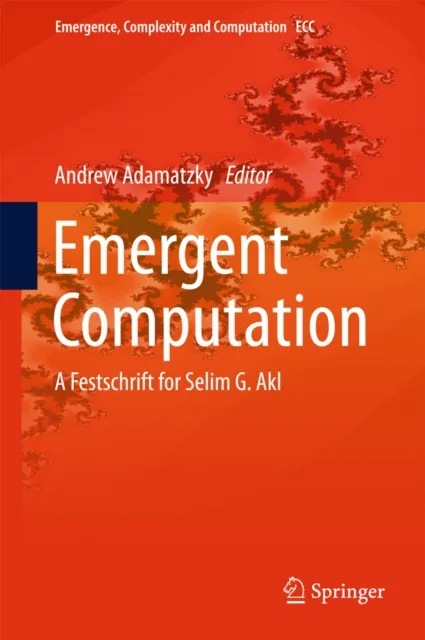
Emergent Computation
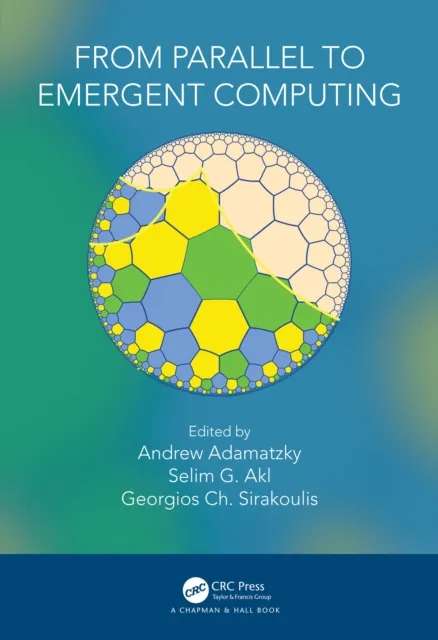
A Festschrift for Selim G. Akl

Dedication
This book is dedicated to Professor Selim G. Akl to honour his groundbreaking research achievements in computer science over four decades.
Overview
The book is an intellectually stimulating excursion into emergent computing paradigms, architectures and implementations. World top experts in computer science, engineering and mathematics overview exciting and intriguing topics of musical rhythms generation algorithms, analyse the computational power of random walks, dispelling a myth of computational universality, computability and complexity at the microscopic level of synchronous computation, descriptional complexity of error detection, quantum cryptography, context-free parallel communicating grammar systems, fault tolerance of hypercubes, finite automata theory of bulk-synchronous parallel computing, dealing with silent data corruptions in high-performance computing, parallel sorting on graphics processing units, mining for functional dependencies in relational databases, cellular automata optimisation of wireless sensors networks, connectivity preserving network transformers, constrained resource networks, vague computing, parallel evolutionary optimisation, emergent behaviour in multi-agent systems, vehicular clouds, epigenetic drug discovery, dimensionality reduction for intrusion detection systems, physical maze solvers, computer chess, parallel algorithms to string alignment, detection of community structure.
Conclusion
The book is a unique combination of vibrant essays which inspires scientists and engineers to exploit natural phenomena in designs of computing architectures of the future.