£48.99
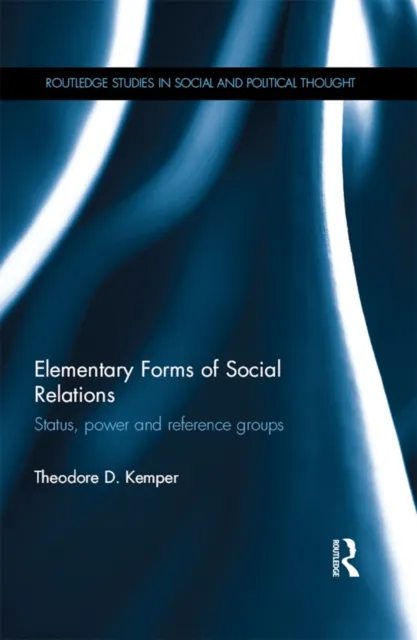
Elementary Forms of Social Relations
Status, power and reference groups

Elementary Forms of Social Relations
Elementary Forms of Social Relations introduces the reader to social life as a perpetual quest by individuals to gain attention, respect and regard (status) accompanied by an effort to marshal defensive and offensive means (power) to overcome the reluctance of others to grant status. This work is based on empirical evidence from many research settings showing that status and power are the main relational modes and that to understand our own and others' social behaviour, we need to understand how status and power operate in relational conduct.
The status-power and reference group approach is applied to enumerate the relatively few ways in which social interaction can occur. Chapters compare the analytic value of the concept of the self with the value of reference groups that create the self. Threads of investigation include: considering the fallacy of abandoning reference groups as sources of cultural information in favour of approaches derived from cognitive neuroscience; examining a multi-person conversation from a status-power-and-reference-group stance as against a view of the same conversation based on principles of Conversation Analysis; and asserting the universality of personal status-power interests even among national leaders to name a few. By applying the author’s main theory to a range of specific cases, the author reaffirms the importance of the social to our understanding of a variety of phenomena, including the self, cultural transmission, the conduct of leaders and economic activity.
This book provides readers with transparent instances of the theory in action and thus will appeal to scholars across the social sciences with interests in theory and social interaction.