£139.50
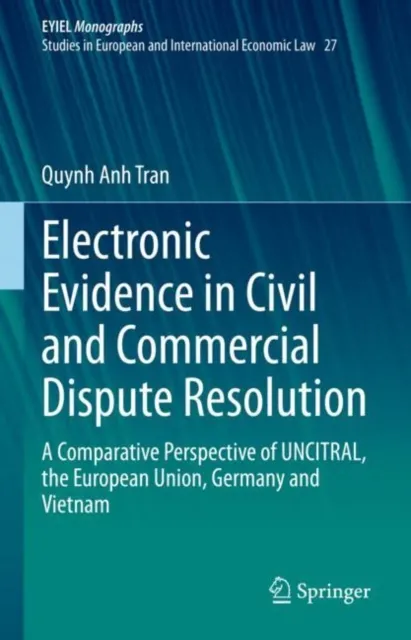
Electronic Evidence in Civil and Commercial Dispute Resolution
A Comparative Perspective of UNCITRAL, the European Union, Germany and Vietnam

Overview
This book provides a deeper understanding of electronic evidence and its use in civil and commercial dispute resolution. The explosive growth of information technology has had major impacts on the development of the economy, society and also on the improvement of legal proceedings with the use of modern technology in all areas of criminal and civil procedures.
Focus and Content
This book focuses on the current provisions of UNCITRAL, the European Union, Germany and Vietnam concerning electronic evidence in civil and commercial dispute resolution. It analyses the notion and the basic aspects of evidence and electronic evidence and explores the process of finding electronic evidence. Further, it discusses how the effectiveness of finding electronic evidence can be reconciled with a respect for fundamental rights, in particular with personal privacy and personal data protection. The book subsequently addresses the authentication and admissibility of electronic evidence; the evaluation of electronic evidence and the burden of proof; and the challenges of using electronic evidence in civil and commercial dispute resolution. Finally, it puts forward proposals for promoting the use of electronic evidence in these contexts.
As the book focuses on the current texts of UNCITRAL and the civil procedure legislation of the European Union, Germany and Vietnam, it relies on a comparative method which deals with the most significant provisions of the above legislation.