£155.00
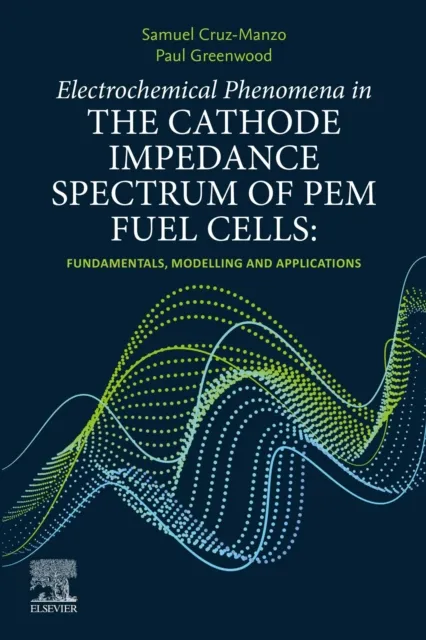
Electrochemical Phenomena in the Cathode Impedance Spectrum of PEM Fuel Cells
Fundamentals and Applications

Electrochemical Phenomena in the Cathode Impedance Spectrum of PEM Fuel Cells: Fundamentals, Modelling, and Applications
Establishes how the electrochemical and diffusion mechanisms of a polymer electrolyte membrane fuel cell (PEMFC) are related to electrochemical impedance spectroscopy (EIS) measurements using physics-based impedance models derived from fundamental electrode and diffusion theories. The contribution of the different phenomena occurring at the different layers comprising the cathode on the impedance response of the PEMFC is revealed through EIS-modelling analysis. The relation between EIS measurements and polarisation curves representing the performance of PEMFCs is established.
Insight is gained into how the EIS response of the PEMFC changes at different operating conditions e.g. relative humidity, load demand, gas reactant stoichiometry and temperature using physics-based impedance models. The application of impedance models with EIS measurements carried out in the individual cells comprising a PEMFC stack is demonstrated, while recent modelling approaches and other impedance models reported in the literature to represent the EIS response of the PEMFC are also considered and discussed.
Provides further understanding of ambiguities during the interpretation of the electrochemical impedance spectrum of the PEMFC
Includes impedance models written in MATLAB® for replication or application to other PEMFC-EIS measurements
Includes impedance spectra of the PEMFC at different operating conditions, electro/diffusion pathways for derivation of the impedance models and flowcharts for application of the impedance models with real-world measured EIS data