£89.50
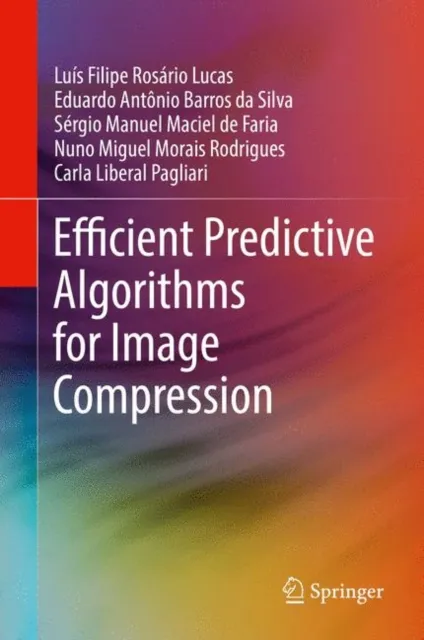
Efficient Predictive Algorithms for Image Compression

Overview
This book discusses efficient prediction techniques for the current state-of-the-art High Efficiency Video Coding (HEVC) standard, focusing on the compression of a wide range of video signals, such as 3D video, Light Fields and natural images. The authors begin with a review of the state-of-the-art predictive coding methods and compression technologies for both 2D and 3D multimedia contents, which provides a good starting point for new researchers in the field of image and video compression. New prediction techniques that go beyond the standardized compression technologies are then presented and discussed.
3D Video and Depth Map Compression
In the context of 3D video, the authors describe a new predictive algorithm for the compression of depth maps, which combines intra-directional prediction, with flexible block partitioning and linear residue fitting.
Light Field and Still Image Compression
New approaches are described for the compression of Light Field and still images, which enforce sparsity constraints on linear models. The Locally Linear Embedding-based prediction method is investigated for compression of Light Field images based on the HEVC technology. A new linear prediction method using sparse constraints is also described, enabling improved coding performance of the HEVC standard, particularly for images with complex textures based on repeated structures.
Unified Intra-Prediction Framework
Finally, the authors present a new, generalized intra-prediction framework for the HEVC standard, which unifies the directional prediction methods used in the current video compression standards, with linear prediction methods using sparse constraints. Experimental results for the compression of natural images are provided, demonstrating the advantage of the unified prediction framework over the traditional directional prediction modes used in HEVC standard.