£57.99
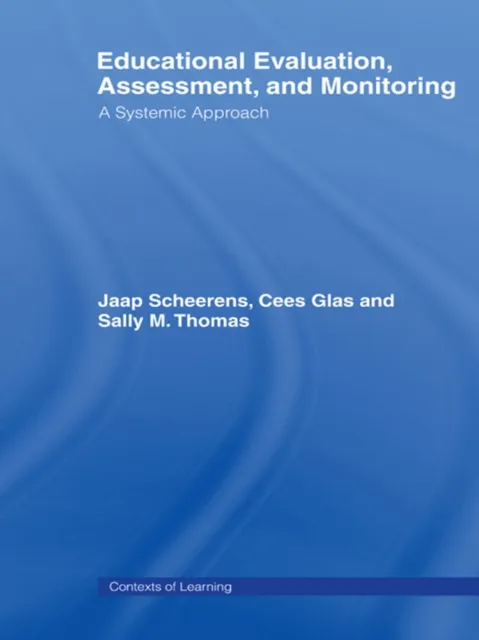
Educational Evaluation, Assessment and Monitoring
A Systematic Approach

Introduction
This book looks at the foundations of school self-evaluation from a scientific as from a practical perspective. Planning concepts, restructuring of education systems, organizational theory on schools, evaluation methodology and models of school effectiveness and school improvement are discussed as contributing to the overall conceptualization of school self-evaluation.
A broad range of approaches is presented and methodological requirements are discussed. School self-evaluation contains controversial issues that reflect tension between the need for objectivity in a context that is permeated by values and potential conflicts of interests.
Controversial Issues
Similar tensions may be seen to exist with respect to the static and "reductionist" aspects of available data collection procedures in a complex and dynamic situation and the appeal for external accountability on the one hand and improvement oriented self-reflection on the other.
Objectives and Framework
The mission of the book is to clarify these tensions and offer ways to deal with them in practical applications. The school effectiveness knowledge base is offered as a substantive educational frame of references that serves an important function in selecting relevant factors for data collection and the use of the evaluation results.