£36.00
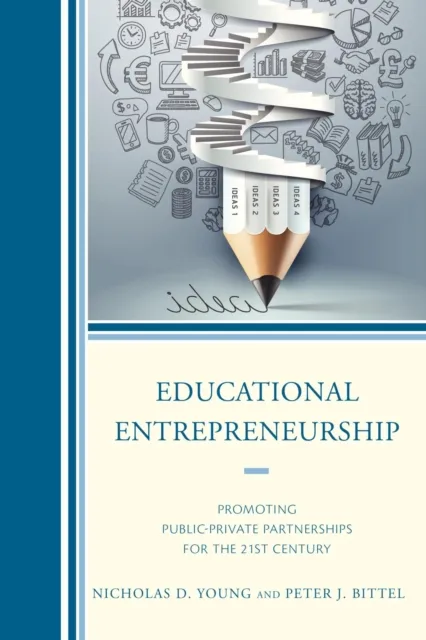
Educational Entrepreneurship
Promoting Public-Private Partnerships for the 21st Century

Target Audience and Purpose
School superintendents, business managers, central office leaders, elected officials, industry leaders, educators, and aspiring practitioners in the field of education will find this book a useful resource in understanding innovative ways to stretch limited school resources or to improve the scope and quality of services and programs offered to deserving students.
Focus and Approach
Approaching educational entrepreneurship by leveraging public and private partnerships is the primary focus throughout the book. Where available, real-world examples from school districts across the country are presented to provide the reader with ideas to consider and potentially emulate.
Content and Topics
Appreciating that there are innumerable ways for school leadership to pursue entrepreneurialism, chapters that represent a wide cross-section of common areas of educational practice were selected for inclusion. It should not be surprising, then, that such topics as curriculum development, educational technology, cooperative purchasing, higher education relationships, grant writing, foundation planning, and special education service delivery were all examined as potential public-private partnership opportunities.
Challenges and Call to Action
Improving schools in the twenty-first century will require new ways of approaching age-old challenges, not the least of which centers on increasingly scarce public funding. In response, the authors invite all readers to join the quest of applying the principles of entrepreneurship to schools to make them even stronger for the next generation.