£139.99
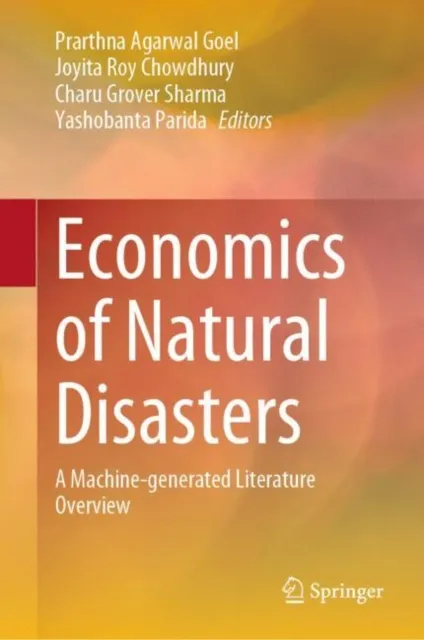
Economics of Natural Disasters
A Machine-generated Literature Overview

This book is a machine-generated literature overview that explores the theoretical and empirical aspects of economics of natural disasters such as floods, cyclones, droughts, and earthquakes from a policy perspective. It provides a comprehensive collection of economic theories in Disasters and empirical findings that would benefit scholars in academia and policy-making. On the theory side, there is a growing use of game theory, Input-Output, computable general equilibrium models, and Catastrophe models to analyze the economic impacts of natural disasters. These models provide optimal decisions for the government concerning disaster relief.
On the empirical front, studies showing causal and associative relationships between disasters and socio-economic variables are important for estimating disaster-related losses and making appropriate policy suggestions.
Critical Aspects and Interlinkages of Natural Disasters
The book explores different critical aspects and interlinkages of natural disasters; economic, social, and political. Besides having localized effects, disasters influence macroeconomic parameters, such as impacts on international trade and foreign direct investment. Moreover, the effects of disasters are subject to interventions from various national and international agencies.
It discusses fiscal pressures caused due to disasters and existing policies related to disaster-risk mitigation and management as a guide to policy-making. It is an important guide to researchers and policymakers examining the socio-economic impact of natural disasters and public investment for disaster-risk mitigation.