£42.99
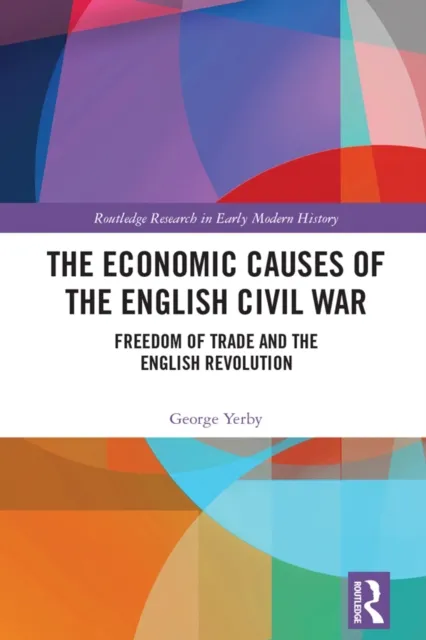
Economic Causes of the English Civil War
Freedom of Trade and the English Revolution

Introduction
This is a coordinated presentation of the economic basis of revolutionary change in 16th- and early-17th century England, addressing a crucial but neglected phase of historical development. It traces a transformation in the agrarian economy and substantiates the decisive scale on which this took place, showing how the new forms of occupation and practice on the land related to seminal changes in the general dynamics of commercial activity.
Emergence of a National Market
An integrated, self-regulating national market generated new imperatives, particularly a demand for a right of freedom of trade from arbitrary exactions and restraints. This took political force through the special status that rights of consent had acquired in England, based on the rise of sovereign representative law following the Break with Rome.
Merchant-Gentry Alliance
These associations were reflected in a distinctive merchant-gentry alliance, seeking to establish freedom of trade and representative control of public finance, through parliament. This produced a persistent challenge to royal prerogatives such as impositions from 1610 onwards.
Revolutionary Measures
Parliamentary provision, especially legislation, came to be seen as essential to good government. These ambitions led to the first revolutionary measures of the Long Parliament in early 1641, establishing automatic parliaments and the normative force of freedom of trade.