£43.99
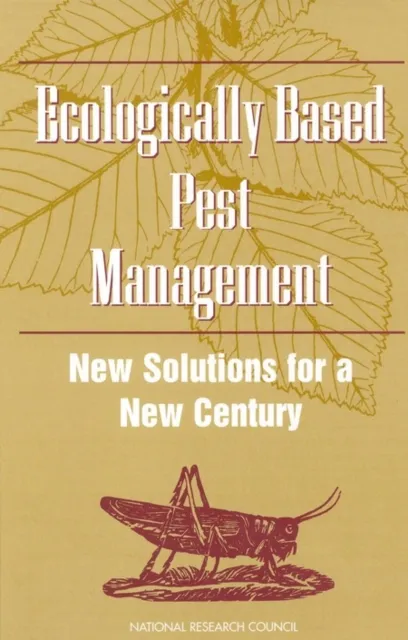
Ecologically Based Pest Management
New Solutions for a New Century

Overview
Widespread use of broad-spectrum chemical pesticides has revolutionized pest management. But there is growing concern about environmental contamination and human health risks—and continuing frustration over the ability of pests to develop resistance to pesticides. In Ecologically Based Pest Management, an expert committee advocates the sweeping adoption of ecologically based pest management (EBPM) that promotes both agricultural productivity and a balanced ecosystem. This volume offers a vision and strategies for creating a solid, comprehensive knowledge base to support a pest management system that incorporates ecosystem processes supplemented by a continuum of inputs—biological organisms, products, cultivars, and cultural controls. The result will be safe, profitable, and durable pest management strategies.
Evaluation and Impact
The book evaluates the feasibility of EBPM and examines how best to move beyond optimal examples into the mainstream of agriculture. The committee stresses the need for information, identifies research priorities in the biological as well as socioeconomic realm, and suggests institutional structures for a multidisciplinary research effort. Ecologically Based Pest Management addresses risk assessment, risk management, and public oversight of EBPM. The volume also overviews the history of pest management—from the use of sulfur compounds in 1000 B.C. to the emergence of transgenic technology. Ecologically Based Pest Management will be vitally important to the agrichemical industry; policymakers, regulators, and scientists in agriculture and forestry; biologists, researchers, and environmental advocates; and interested growers.