£145.00
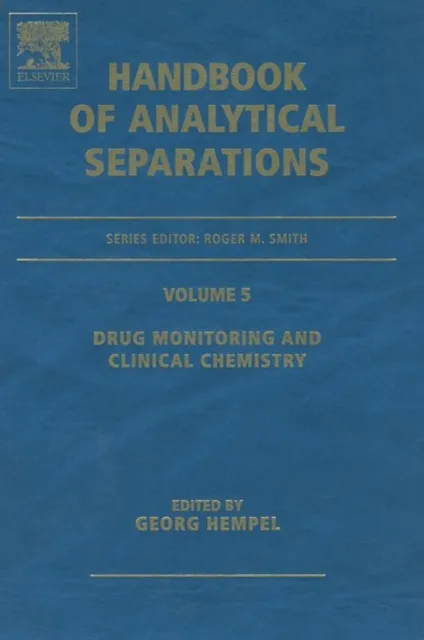
Drug Monitoring and Clinical Chemistry

Drug Monitoring and Clinical Chemistry
The 5th volume in the Handbook of Analytical Separations series, gives an overview about methods to analyse drugs in biological fluids. The most widely used methods to analyse drugs in biological fluids, i.e., chromatographic methods, CE, and immunoassays, are described in detail.
For important drugs, an overview of the methods available and a comparison of the techniques should be given to enable the reader to choose the right method depending on laboratory equipment, staff, the aim of the investigation, etc. Other general aspects important for conducting therapeutic drug monitoring or pharmacokinetics studies are also covered, i.e., sample preparation, validation of the analytical methods, and pharmacokinetic methods for interpreting the data.
Areas where therapeutic drug monitoring is used frequently, such as antibiotics, immunosuppressant drugs, antipsychotic, and anticancer drugs, will be discussed in detail. In addition, the important field of phenotyping and genotyping for therapy optimisation with a focus on real-life applications is also covered.
The book contains important information for analysts working on drug analysis in clinical chemistry, hospital pharmacists involved in therapeutic drug monitoring, other pharmacists, chemists, or physicians working on pharmacokinetic studies in industry or academia.
In contrast to other books in this field, this book provides up-to-date information regarding both methodology and clinical applications. For the applications, only fields where therapeutic drug monitoring is used in clinical routine and provides benefit to the patients are described.
- Overview of all important fields where therapeutic drug monitoring is applied
- All relevant analytical and computational methods are discussed
- Written by experts with a lot of practical experience in the field