£4.99
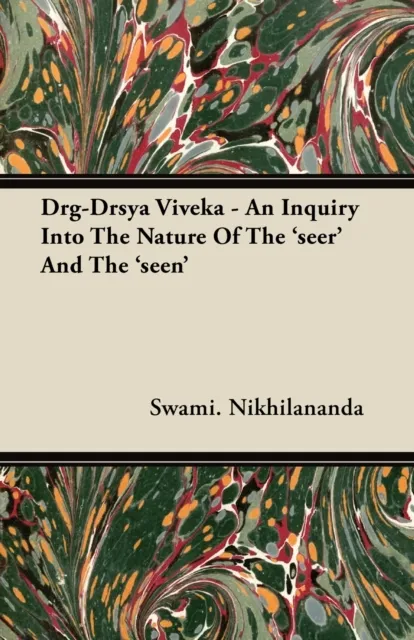
Drgdrsyaviveka
A philosophical investigation into the nature of the 'Seer' and the 'seen'

Introduction to Dṛgdṛśyaviveka
The Dṛgdṛśyaviveka, which is attributed to ŚAṄKARA, invites us to discern (viveka) between Real and non-real, between the ātman (Self), the "Seer," and the non-ātman (non-Self), the "seen," between Infinite and finite, between Life and death. The human being's greatest conflicts stem from attachment to and identification with the non-ātman, with the finite. Knowledge, on the other hand, leads to the unveiling of sat, True Existence.
Commentary by Raphael
RAPHAEL comments: A star is born, grows, matures, ages and dies, and these events are an uninterrupted flow of change. There is never a moment when the physical world undergoes no change or atomic or molecular transformation. If we are in agreement that the Absolute must be eternally "constant", "unvarying" then we cannot look for it in the world of phenomena, whether objective or subjective.
Details of Dṛgdṛśyaviveka
Thus the Dṛgdṛśyaviveka expounds a detailed description of the different kinds of concentration (samādhi), of the three theories empirically concerning the jīva, and other questions of vital importance to the Vedānta teaching.
Words of Svāmi Nikhilānanda
In Svāmi Nikhilānanda's words: "This work, which contains only forty-six ślokas is an excellent vade-mecum (handbook) for students of advanced courses in Advaita philosophy."
About ŚAṄKARA
ŚAṄKARA has been one of the greatest philosophers of India. He dedicated his brief and intense life (788-820) to re-establish the authority of the Śruti, to codify the Advaita Vedānta, the doctrine of Non-duality, and to anchor the Metaphysical Tradition of the Veda through the foundation of monasteries (maṭhas) and monastic orders. With his bhāṣya (commentary) to the Upaniṣads, the Brahmasūtra, and the Bhagavadgītā, as well as with his own writings, Śaṅkara has profoundly influenced not only India's philosophical development, but that of the entire world.