£20.29
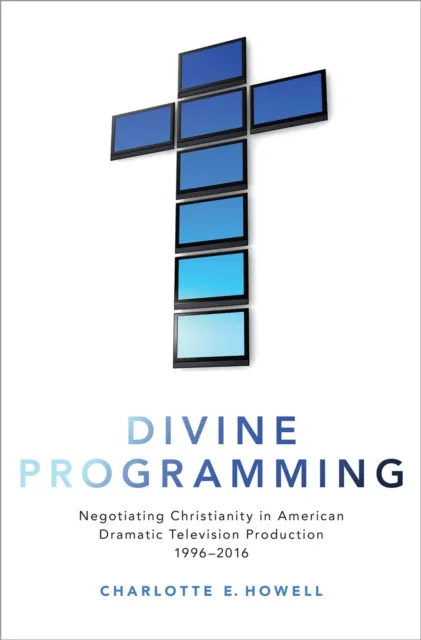
Divine Programming
Negotiating Christianity in American Dramatic Television Production 1996-2016

Introduction
From the mid-90s to the present, television drama with religious content has come to reflect the growing cultural divide between white middle-America and concentrated urban elites. As author Charlotte E. Howell argues in this book, by 2016, television narratives of white Christianity had become entirely disconnected from the religion they were meant to represent. Programming labeled ''family-friendly'' became a euphemism for white, middlebrow America, and developing audience niches became increasingly significant to serial dramatic television.
Case Studies and Themes
Utilizing original case studies and interviews, Divine Programming investigates the development, writing, producing, marketing, and positioning of key series including 7th Heaven, Friday Night Lights, Rectify, Supernatural, Jane the Virgin, Daredevil, and Preacher. As this book shows, there has historically been a deep ambivalence among television production cultures regarding religion and Christianity more specifically.
Historical Context and Audience Shifts
It illustrates how middle-American television audiences lost significance within the Hollywood television industry and how this in turn has informed and continues to inform television programming on a larger scale. In recent years, upscale audience niches have aligned with the perceived tastes of affluent, educated, multicultural, and—importantly—secular elites. As a result, the televised representation of white Christianity had to be othered, and shifted into the unreality of fantastic genres to appeal to niche audiences.
Analytical Approaches
To examine this effect, Howell looks at religious representation through four approaches — establishment, distancing, displacement, and use — and looks at series across a variety of genres and outlets in order to provide varied analyses of each theme.