£149.50
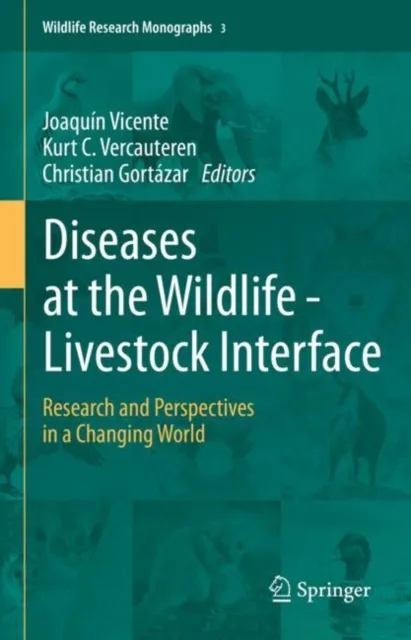
Diseases at the Wildlife - Livestock Interface
Research and Perspectives in a Changing World

Shared Diseases and Their Impact
Shared diseases among wildlife, livestock and humans, often transboundary, are relevant to public health and global economy, as being highlighted currently relative to the global COVID19 pandemic. Diseases at these interfaces also impact the conservation of biodiversity and must be considered when managing wildlife. While wildlife and domestic livestock have coexisted in dynamic systems for thousands of years, spillover disease risks are higher today than in the past due to global patterns of increasing close contact and interactions among wildlife, livestock and humans in the context of complex, diverse and numerous circumstances. Multidisciplinary studies of animal interfaces, especially those involving wildlife, therefore, must be brought to the forefront so that knowledge gaps can be realized and filled to inform managers and policy makers.
Structure of the Book
In the first part of the book authors illustrate and discuss ecological and epidemiological concepts related to the interfaces, with a vision towards socio-ecological system health. In addition, the history of past animal interfaces provides the necessary perspective to focus current questions, better understand present situations, and informs how we can best approach the future. The second part discusses the myriad of similar and differing wildlife-livestock interfaces found around the world from a regional point of view. The third part focuses on how to assess the spatial and temporal overlap between livestock and wildlife, and authors present new technical innovations about how inter-transmissions between wild and domestic populations can be quantified. An overview of main modeling approaches available to quantify multi-host disease transmission at the wildlife/livestock interface, illustrated with specific-case studies, is also presented. Finally, the need for interdisciplinary approaches and a dedicated thematic field to approach the wildlife/livestock interfaces and create opportunities to promote wildlife–livestock coexistence is emphasized.
Future Perspectives
The concluding chapter presents perspectives and directions to better understanding disease dynamics at the wildlife/livestock interface, global change and implications for the future. The changing distribution of interfaces, ongoing human and environmental changes (e. g. climate warming, changes in animal production systems, etc.) and their likely impacts and consequences for the interfaces and disease transmission processes are all discussed.