£45.99
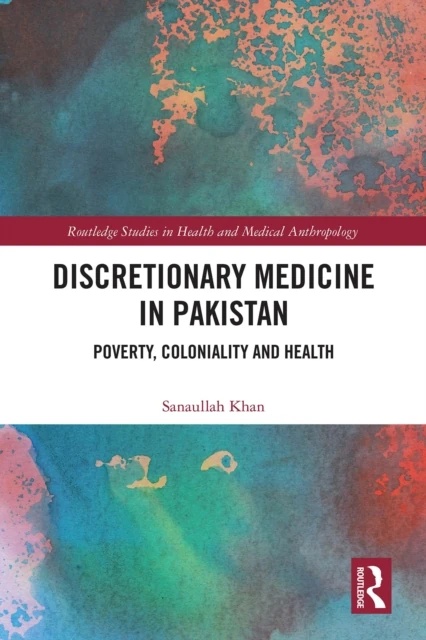
Discretionary Medicine in Pakistan
Poverty, Coloniality and Health

Introduction
This book uses the notion of "discretionary medicine" to explore the landscape of contemporary healthcare in Pakistan. It considers how patients frequently experience health interventions as out of touch with the suffering of everyday life and how healthcare provisions are viewed as intrusive, corrupted, and lacking in empathy towards the sick.
Focus on Mental Health
The study focuses on mental health, acknowledging that the experience of mental illness in Pakistan is increasingly inseparable from conditions of chronic poverty caused directly by deepening inequality. The chapters address the establishment of priorities by the Pakistani healthcare system in conjunction with global disease programs and investigate the misalignments between the priorities of global institutes and local expectations/realities.
Discretionary Nature of Medicine
It is argued that the discretionary nature of medicine is caused by the remnants of colonial-era laws, which link the maintenance of public health with questions of security. This, the author suggests, frequently contributes to forms of care that are riddled with bureaucratic violence.
Research and Perspective
Using a combination of archival and ethnographic research, the book offers a multi-sited and interdisciplinary perspective on healthcare, ranging from care within low-income households and neighborhoods to diasporic communities and state institutions.
Intended Audience
It will be of interest to scholars and students of medical/psychiatric anthropology, global health, and history of medicine, as well as South Asian and Pakistan studies.