£22.39
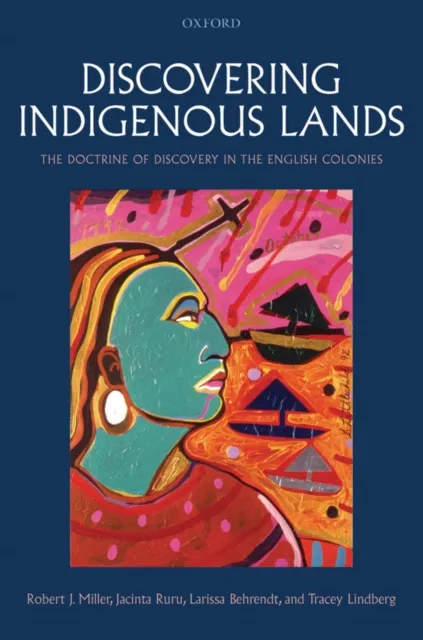
Discovering Indigenous Lands
The Doctrine of Discovery in the English Colonies

Introduction
This book presents new material and shines fresh light on the under-explored historical and legal evidence about the use of the doctrine of discovery in Australia, Canada, New Zealand and the United States.
North America, New Zealand and Australia were colonised by England under an international legal principle that is known today as the doctrine of discovery. When Europeans set out to explore and exploit new lands in the fifteenth through to the twentieth centuries, they justified their sovereign and property claims over these territories and the indigenous peoples with the discovery doctrine.
Historical Context
This legal principle was justified by religious and ethnocentric ideas of European and Christian superiority over the other cultures, religions, and races of the world. The doctrine provided that newly-arrived Europeans automatically acquired property rights in the lands of indigenous peoples and gained political and commercial rights over the inhabitants.
The English colonial governments and colonists in North America, New Zealand and Australia all utilised this doctrine, and still use it today to assert legal rights to indigenous lands and to assert control over indigenous peoples.
Authors and Perspective
Written by indigenous legal academics - an American Indian from the Eastern Shawnee Tribe, a New Zealand Maori (Ngati Rawkawa and Ngai Te Rangi), an Indigenous Australian, and a Cree (Neheyiwak) in the country now known as Canada, Discovering Indigenous Lands provides a unique insight into the insidious historical and contemporary application of the doctrine of discovery.