£41.99
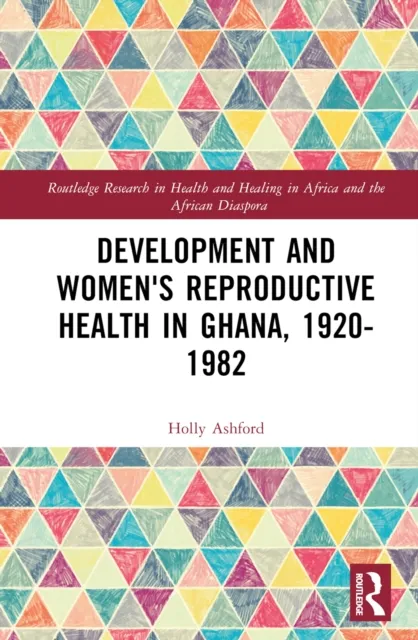
Development and Women's Reproductive Health in Ghana, 1920-1982

This book investigates the history of women’s reproductive health in Ghana,
arguing that between the 1920s and 1980s, it was largely driven by discourses of
development and population control rather than a concern for women’s health or
rights.
Between the 1920s and 1980s, the choices that Ghanaian women made
regarding their reproductive health were defined by development policy and
practice. Spanning the colonial and immediate postcolonial periods, this book
demonstrates that whilst the substance of development discourse shifted over
time, principles of development continued to be used to impact and legitimise
reproductive health policy and practices well after independence. The book
explores Ghana’s pluralist health system, the introduction of maternal and child
welfare, the dominance of the Red Cross in Ghana’s maternal and child health
landscape, nationalist pronatalism and global population activism. In order to
understand how global iterations of development and health policy impacted
ordinary lives in Ghana, the author uses evidence from multiple ‘levels,’ including
private papers, national archives and records of international and transnational
organisations. Providing balanced archival perspectives, the book includes
extensive oral history interviews carried out with both rural Ghanaian women and
traditional birth attendants, as well as with midwives, doctors and family planning
fieldworkers.
This book will have an important impact on a number of historical fields
including Ghanaian history, global health history, global histories of population
and family planning and histories of development. It will be of interest to
researchers and students in the history of public health, development, Africa,
Ghana and gender.