£31.99
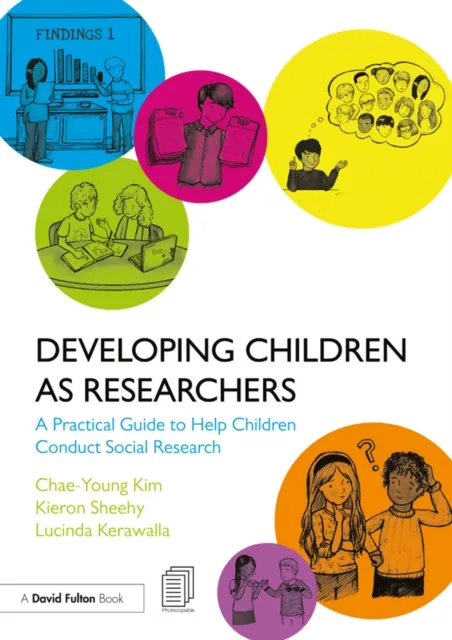
Developing Children as Researchers
A Practical Guide to Help Children Conduct Social Research

Encouraging young children to create and carry out their own social research projects can have significant social and educational benefits. In addition, their research may help them to influence local and national policies and practices on issues that matter to them. To support this, Developing Children as Researchers acts as a practical guide to give teachers – and other adults who work with children – a set of structured, easy-to-follow session plans that will help children to become researchers in their own right.
Comprising of ten session plans that have already been tried and tested in schools, this guide will assist you in supporting child researchers while helping you to develop the techniques for teaching research skills effectively. The session plans also ensure that children’s views are heard and reflected by encouraging their active curiosity and investigation of issues that they may be concerned about. Forming a step-by-step guide, the ten sessions cover themes such as:
Starting the research process and identifying a research topic
The three key principles of research: be sceptical, systematic and ethical
Choosing research participants and drawing up a research plan
The range of data collection and analysis methods
Reporting the results of, and reflecting upon, a research project
Children’s research has often depended upon the support of academic researchers to provide resources and training. By making the research training and facilitation process more widely accessible, this guide will help remove the psychological and practical hurdles that teachers and others who regularly work with children might feel about helping children’s research themselves.