£55.95
Designing Information
Human Factors and Common Sense in Information Design

The Book
"The book itself is a diagram of clarification, containing hundreds of examples of work by those who favor the communication of information over style and academic postulation—and those who don''t. Many blurbs such as this are written without a thorough reading of the book. Not so in this case. I read it and love it. I suggest you do the same."
—Richard Saul Wurman
Reviews
"This handsome, clearly organized book is itself a prime example of the effective presentation of complex visual information."
—eg magazine
"It is a dream book, we were waiting for…on the field of information. On top of the incredible amount of presented knowledge this is also a beautifully designed piece, very easy to follow…"
—Krzysztof Lenk, author of Mapping Websites: Digital Media Design
"Making complicated information understandable is becoming the crucial task facing designers in the 21st century. With Designing Information, Joel Katz has created what will surely be an indispensable textbook on the subject."
—Michael Beirut
"Having had the pleasure of a sneak preview, I can only say that this is a magnificent achievement: a combination of intelligent text, fascinating insights and - oh yes - graphics. Congratulations to Joel."
—Judith Harris, author of Pompeii Awakened: A Story of Rediscovery
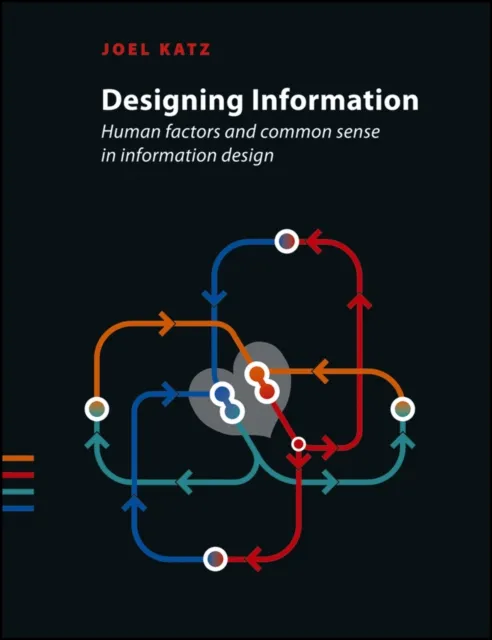
Designing Information shows designers in all fields - from user-interface design to architecture and engineering - how to design complex data and information for meaning, relevance, and clarity. Written by a worldwide authority on the visualization of complex information, this full-color, heavily illustrated guide provides real-life problems and examples as well as hypothetical and historical examples, demonstrating the conceptual and pragmatic aspects of human factors-driven information design. Both successful and failed design examples are included to help readers understand the principles under discussion.