£32.00
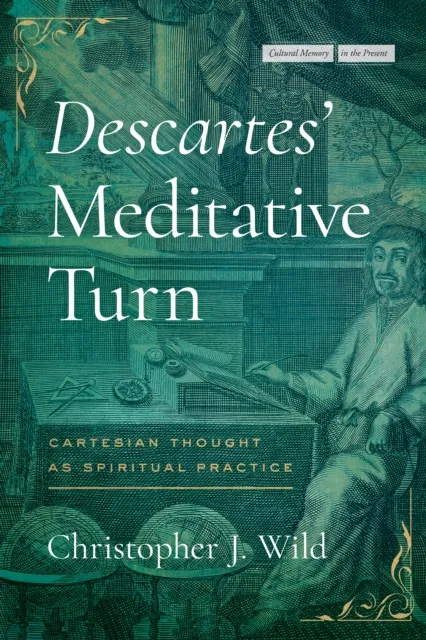
Descartes' Meditative Turn
Cartesian Thought as Spiritual Practice

Why would René Descartes, the father of modern rationalist philosophy, choose "meditations"—a term and genre associated with religious discourse and practice—for the title of his magnum opus that lays the metaphysical foundations for his reform of all knowledge, including mathematics and sciences?
Why did he believe that the immortality of the soul and the existence of God, which the Meditations on First Philosophy set out to demonstrate, can only be made self-evident through meditating? These are the questions that Christopher Wild's book answers.
Descartes discovered the "foundations of a marvelous science" through a dramatic conversion in southern Germany in the winter of 1619. The spiritual and cognitive exercises, derived from ancient philosophy and the Christian meditative tradition, which Descartes deployed in the Meditations, enable readers to discover metaphysical truths with the same degree of self-evidence with which Descartes did during his own conversion. Descartes' meditative turn, Wild argues, brings to a culmination a lifelong preoccupation with the practice or craft of thinking, known as Cartesian method. By joining meditation to method the Meditations becomes the founding document for a Cartesian "art of turning," a new practice of both thought and life.