£10.79
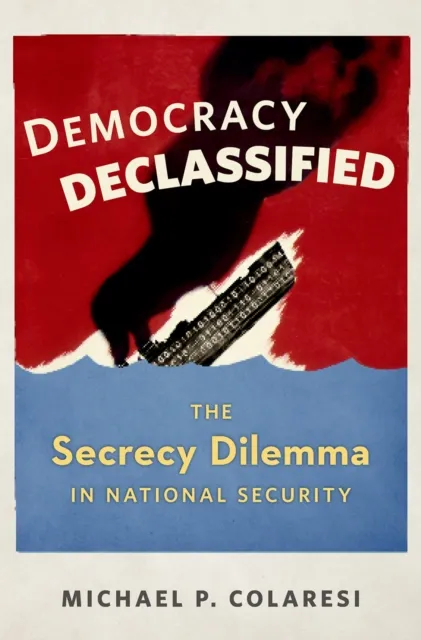
Democracy Declassified
The Secrecy Dilemma in National Security

Recent scandals like WikiLeaks and Edward Snowden's disclosure of NSA documents have brought public debates over government accountability and secrecy bubbling to the surface.
How can modern democracies balance the need for privacy in delicate foreign policy matters with the necessity of openness in gaining and maintaining the trust of citizens? Democracies keep secrets from potential enemies and their citizens. This simple fact challenges the surprisingly prevalent assumption that foreign policy successes and failures can be attributed to public transparency and accountability. In fact, the ability to keep secrets has aided democratic victories from the European and Pacific theatres in World War II to the global competition of the Cold War. At the same time, executive discretion over the capacity to classify information created the opportunity for abuse that contributed to Watergate, as well as domestic spying and repression in France, Norway and Canada over the past forty years.
Therefore, democracies face a secrecy dilemma. Secrecy is useful, but once a group or person has the ability to decide what information is concealed from a rival, citizens can no longer monitor that information. How then can the public be assured that national security policies are not promoting hidden corruption or incompetence? As Democracy Declassified shows, it is indeed possible for democracies to keep secrets while also maintaining useful national security oversight institutions that can deter abuse and reassure the public.
Understanding secrecy and oversight in democracies helps us explain not only why the Maginot Line rose and the French Republic fell, or how the US stumbled but eventually won the Cold War, but more generally how democracies can benefit from both public consent and necessary national security secrets. At a time when ubiquitous debates over the issue of institutional accountability and transparency have reached a fever pitch, Democracy Declassified provides a grounded and important view on the connection between the role of secrecy in democratic governance and foreign policy-making.