£179.99
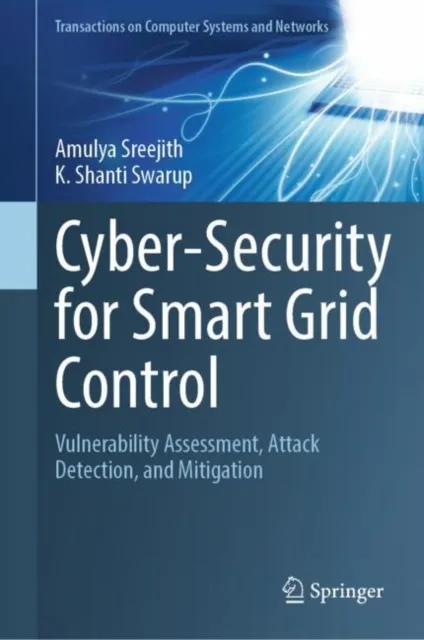
Cyber-Security for Smart Grid Control
Vulnerability Assessment, Attack Detection, and Mitigation

Overview
The book focuses on a very important area of Smart Grids - cyber security. It deals in particular with the tools and techniques for cyber security analysis of the Smart Grid control systems. This includes the standards and guidelines, detailed vulnerability assessment framework, attack detection strategies, and attack mitigation methods.
Part Structure
The book is divided into three parts. The first part discusses the smart grid cyber-physical system. The second part introduces the attacks in the grid system and a vulnerability assessment framework followed by a tool that can be used to analyze the grid control systems using existing cyber security standards. In the third part, different forms of attack detection methods are discussed along with Python-based implementations for the same.
Additional Content
The book also discusses attack mitigation methods with implementation. Detailed illustrations and tables are provided in each section. The book includes case studies based on standard test systems, helping students to implement the discussed methods. These case studies are based on MATLAB and Python implementations, catering to a wide range of audiences. Outputs and screenshots of the tools and programs are included so students can compare their results and improve upon the discussed methods.
Intended Audience
The book will be useful to a wide variety of audiences such as students and researchers in Smart Grids, power system operators, and device manufacturers.