£89.50
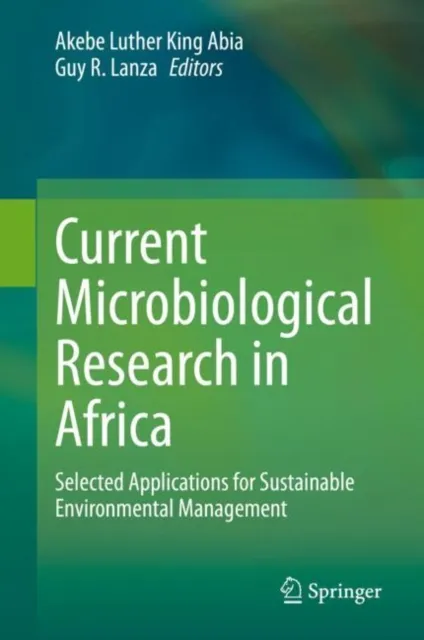
Current Microbiological Research in Africa
Selected Applications for Sustainable Environmental Management

Scientific output in low- and middle-income countries
Scientific output in low- and middle-income countries is greatly challenged by numerous factors. This is particularly pronounced in sub-Saharan African countries, despite the continent being the world’s second largest and second most-populous continent, currently undergoing rapid economic growth. Financial constraints and unclear areas of focus when funding is available, are among the limiting factors, with the consequence being the development of inadequate policies, especially those relating to environmental protection and conservation.
Book overview
This 13-chapter book is a unique piece in the field of microbiology, designed to stimulate some research areas in Africa by illustrating interesting and informative examples of the current applied research agenda in environmental microbiology in selected countries within the continent. With authors from the North, South, East and West of Africa, the book touches diverse applied methods and approaches to meet the pragmatic needs faced by environmental microbiologists in Africa. Also included are topics on viruses, bacteria (including cyanobacteria), and protozoa, and their importance in disease. Sustainable agriculture and aquaculture, and eco-friendly oil and hydrocarbon bioremediation and degradation approaches are highlighted. Microbial involvement in different common indoor (e.g., household kitchens, latrines, and hospitals) and outdoor settings including air, soil, and water habitats, and their resistance to commonly used antibiotics, are described. Hopefully, the work presented here will stimulate the need for increasing modern training and funding initiatives to prepare African microbiologists to meet the challenges they face in African universities and research laboratories.