£68.39
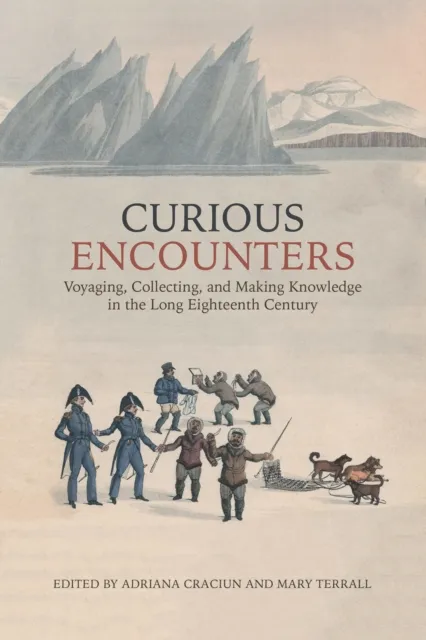
Curious Encounters
Voyaging, Collecting, and Making Knowledge in the Long Eighteenth Century

With contributions from historians, literary critics, and geographers
Curious Encounters uncovers a rich history of global voyaging, collecting, and scientific exploration in the long eighteenth century. Leaving behind grand narratives of discovery, these essays collectively restore a degree of symmetry and contingency to our understanding of encounters between European and Indigenous people.
To do this the essays consider diverse agents of historical change, both human and inanimate: commodities, curiosities, texts, animals, and specimens moved through their own global circuits of knowledge and power. The voyages and collections rediscovered here do not move from a European center to a distant periphery, nor do they position European authorities as the central agents of this early era of globalization.
Long distance voyagers from Greenland to the Ottoman Empire crossed paths with French, British, Polynesian, and Spanish travelers across the world, trading objects and knowledge for diverse ends. The dynamic contact zones of these curious encounters include the ice floes of the Arctic, the sociable spaces of the tea table, the hybrid material texts and objects in imperial archives, and the collections belonging to key figures of the Enlightenment, including Sir Hans Sloane and James Petiver.