£40.00
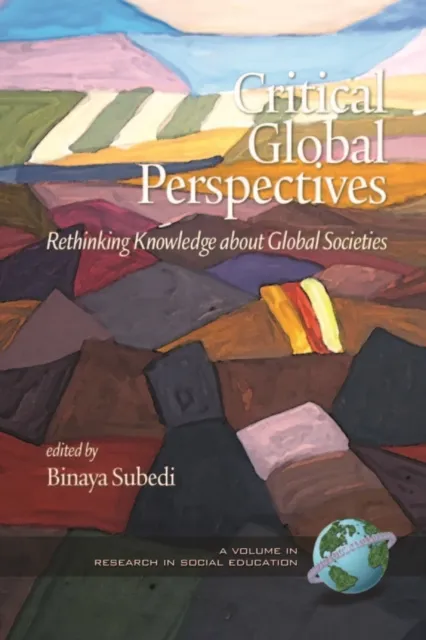
Critical Global Perspectives
Rethinking Knowledge about Global Societies

Purpose of the Book
The primary purpose of this book is to invite educators to (re)think what it means to critically conceptualize knowledge about the world. In other words, imagining curriculum in a critical way means decolonizing mainstream knowledge about global societies. Such an approach re-evaluates how we have come to know the world and asks us to consider the socio-political context in which we have come to understand what constitutes an ethical global imagination.
Critical Reading and Pedagogy
A critical reading of the world calls for the need to examine alternative ways of knowing and teaching about the world: a pedagogy that recognizes how diverse subjects have come to view the world. A critical question this book raises is: What are the radical ways of re-conceptualizing curriculum knowledge about global societies so that we can become accountable to the different ways people have come to experience the world? Another question the book raises is: how do we engage with complexities surrounding social differences such as gender, race, ethnicity, religion, etc., in the global contexts?
Global Issues and Social Difference
Analyzing global issues and events through the prism of social difference opens up spaces to advocate a transformative framework for a global education curriculum. Transformative in the sense that such a curriculum asks students to challenge stereotypes and engages students in advocating changes within local/global contexts.
Beyond the Nation-State
A critical global perspective advocates the value of going beyond the nation-state centered approach to teaching about topics such as history, politics, culture, etc. It calls for the need to develop curriculum that accounts for transnational formations: an intervention that asks us to go beyond issues that are confined within national borders. Such a practice recognizes the complicated ways the local is connected to the global and vice versa and cautions against creating a hierarchy between national and global issues.
It also suggests the need to critically examine the pitfalls of forming dichotomies between the local (or the national) and the global or the center and the periphery.