£29.95
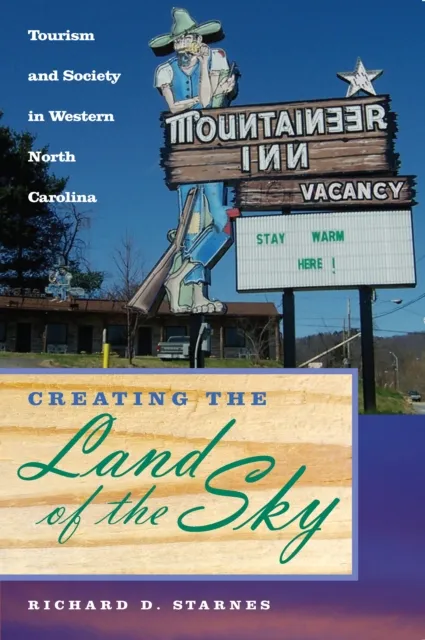
Creating the Land of the Sky
Tourism and Society in Western North Carolina

Introduction to Tourism's Social and Economic Power
A sophisticated inquiry into tourism's social and economic power across the South.
In the early 19th century, planter families from South Carolina, Georgia, and eastern North Carolina left their low-country estates during the summer to relocate their households to vacation homes in the mountains of western North Carolina. Those unable to afford the expense of a second home relaxed at the hotels that emerged to meet their needs. This early tourist activity set the stage for tourism to become the region's New South industry. After 1865, the development of railroads and the burgeoning consumer culture led to the expansion of tourism across the whole region.
Romanticized Image of Appalachia and Its Impact
Richard Starnes argues that western North Carolina benefited from the romanticized image of Appalachia in the post-Civil War American consciousness. This image transformed the southern highlands into an exotic travel destination, a place where both climate and culture offered visitors a myriad of diversions. This depiction was further bolstered by partnerships between state and federal agencies, local boosters, and outside developers to create the attractions necessary to lure tourists to the region.
Community Tensions and Cultural Commodification
As tourism grew, so did the tension between leaders in the industry and local residents. The commodification of regional culture, low-wage tourism jobs, inflated land prices, and negative personal experiences bred no small degree of animosity among mountain residents toward visitors. Starnes's study provides a better understanding of the significant role that tourism played in shaping communities across the South.