£40.49
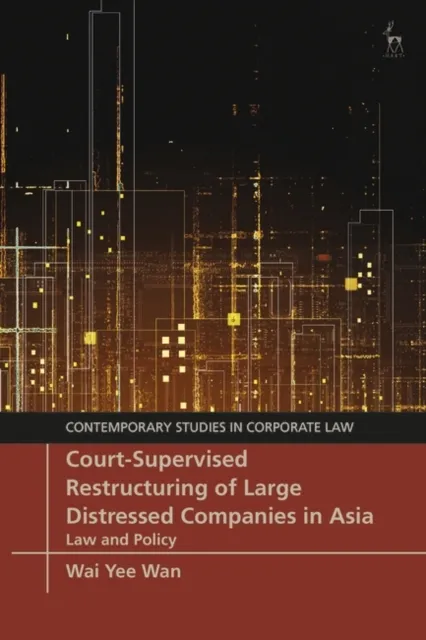
Court-Supervised Restructuring of Large Distressed Companies in Asia
Law and Policy

Overview of Asian Jurisdictions
This book provides an in-depth analysis of 4 economically significant Asian jurisdictions: Mainland China, India, Hong Kong and Singapore. These jurisdictions have recently either reformed – or are considering reforming – their corporate restructuring laws to promote regimes conducive to restructuring financially distressed, but otherwise economically viable, companies.
Legal Framework and References
Mainland China, India, Hong Kong and Singapore continue to adhere to a framework that requires the court's final approval but draw references from Chapter 11 of the Bankruptcy Code 1978 in the United States and/or the schemes of arrangement in the United Kingdom. However, the institutional and market structures are very different in Asia; in particular, Asia has a far higher concentration in shareholdings among listed firms, including holdings by families and the state, and a different composition of creditors.
Evolution of Restructuring Laws
The book explains how, notwithstanding the legal transplantation, corporate restructuring laws in these Asian jurisdictions have adapted and evolved due to the frictions in shareholder-creditor and creditor-creditor relationships, and the role of the state in resolving non-performing loans and financial distress of state-owned enterprises which are listed, or which issue public debt.
Reform Recommendations
The study argues that any reforms must go beyond professionalising the insolvency professionals and the judiciary but must be designed to address fundamental issues of corporate governance, bank regulation and enforcing non-bankruptcy rules. It offers invaluable insights for academics and policy makers alike.