£44.99
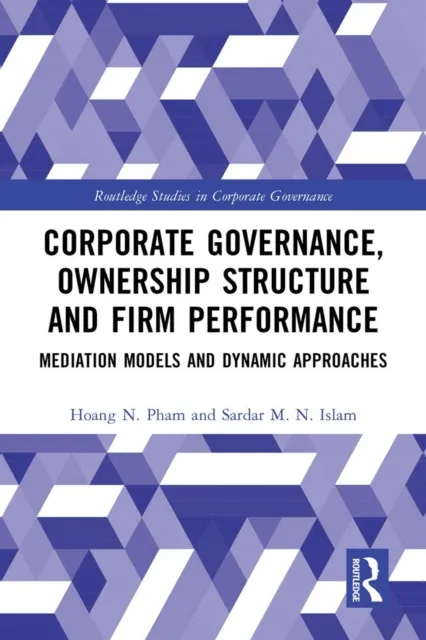
Corporate Governance, Ownership Structure and Firm Performance
Mediation Models and Dynamic Approaches

Introduction
The relationship between ownership structure and firm performance has been studied extensively in corporate finance and corporate governance literature. Nevertheless, the mediation (path) analysis to examine the issue can be adopted as a new approach to explain why and how ownership structure is related to firm performance and vice versa. This approach calls for full recognition of the roles of agency costs and corporate risk-taking as essential mediating variables in the bi-directional and mediated relationship between ownership structure and firm performance.
Model Development
Based on the agency theory, corporate risk management theory and accounting for the dynamic endogeneity in the ownership–performance relationship, this book develops two-mediator mediation models, including recursive and non-recursive mediation models, to investigate the ownership structure–firm performance relationship. It is demonstrated that agency costs and corporate risk-taking are the ‘missing links’ in the ownership structure–firm performance relationship. Hence, this book brings into attention the mediation and dynamic approach to this issue and enhances the knowledge of the mechanisms for improving firm’s financial performance.
Intended Audience
This book will be of interest to corporate finance, management and economics researchers and policy makers. Post-graduate research students in corporate governance and corporate finance will also find this book beneficial to the application of econometrics into multi-dimensional and complex issues of the firm, including ownership structure, agency problems, corporate risk management and financial performance.