£2.99
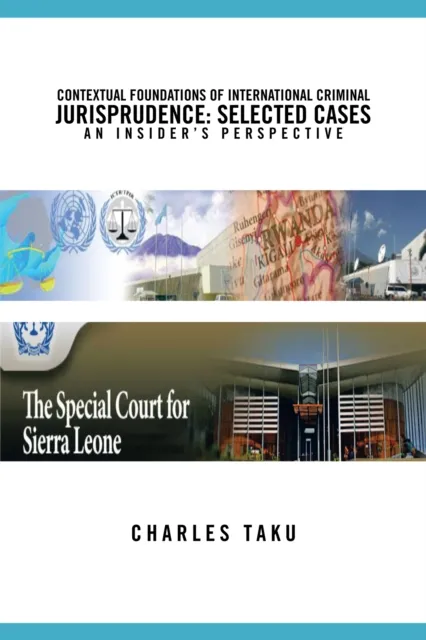
Contextual Foundations of International Criminal Jurisprudence: Selected Cases an Insider'S Perspective

Introduction
Several books have been written on the Rwandan Genocide and the Sierra Leonean civil war. None has yet examined in its own right the various contexts and foundations on which the jurisprudence of tribunals set up by the international community to try perpetrators of the international crimes committed in the territories of the two countries was developed. This book fills that void.
Criticism and Contributions
The two tribunals have had their successes and failures, with the international tribunal for Rwanda singled out for the most poignant criticism for prosecuting only perpetrators from one side only of the conflict. In this context, the criticism that it is victors justice can hardly be shaken off. The jurisprudence developed in trials that are tainted with an accusation as serious as this may be read with jaundiced eyes. Yet it has contributed to the development of international law generally although the judgment of history on it will almost always be harsh because of its discriminatory and selective foundation.
Complexity and Specificity of Cases
Obviously, most of the jurisprudence will not be stare decisis because of the complex nature of the cases and the political motivations that sometimes influenced the proceedings. There can hardly be any gainsaying that although the nature of the crimes may be similar, no two conflicts can be the same. Each comes with its specificity. This specificity and several political economic and socio-cultural factors significantly influence the course of the judicial proceedings before the courts set up to prosecute crimes perpetrated in the conflicts and the jurisprudence developed in those proceedings. This book brings to the attention of the reader some of the evidentiary and contextual foundations on which the jurisprudence in the two courts was established.
Impact and Significance
The jurisprudence without doubt will shape the course of human history in ways unimagined as it is cited in cases that will come for determination before other international tribunals. Understanding the contextual foundations on which the jurisprudence was established will greatly contribute to the certainty of its application and with it that of the law.
Conclusion
The authors is a modest yet noble and salutary contribution to international criminal jurisprudence coming at the heels of the scaling down of the tribunals and the start of the residual mechanisms for both the ICTR and the SCSL. The book is highly recommended to all persons from all walks of life; including victims who sometime wondered how these tribunals worked and the legal and factual foundations underlying established jurisprudence.