£55.99
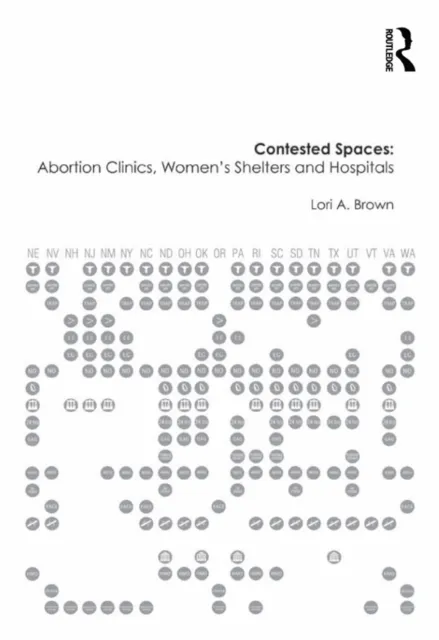
Contested Spaces: Abortion Clinics, Women's Shelters and Hospitals
Politicizing the Female Body

In this book, Lori Brown examines the relationship between space, defined physically, legally and legislatively, and how these factors directly impact the spaces of abortion.
It analyzes how various political entities shape the physical landscapes of inclusion and exclusion to reproductive healthcare access, and questions what architecture's responsibilities are in respect to this spatial conflict. Employing writing, drawing and mapping methodologies, this interdisciplinary project explores restrictions and legislatures which directly influence abortion policy in the US, Mexico and Canada. It questions how these legal rulings produce spatial complexities and why architecture isn't more culturally and spatially engaged with these spaces.
In Mexico, where abortion is fully legal only in Mexico City during the first trimester, women must travel vast distances and undergo extreme conditions in order to access the procedure. Conservative state governments continue to make abortion a severely punishable crime.
In Canada, there are nowhere near the cultural and religious stigmas to abortion as in the US and Mexico. Completely legal and without restrictions, Canada offers an important contrast to the ongoing abortion issues within the US and Mexico.
Researching the spatial implications of such a politicized space, this book expands beyond a study of abortion clinic and includes other spaces such as women's shelters and hospitals that require multiple levels of secured spaces in order to discuss the spatial ramifications of access and security within spaces that are highly personal, private, and sometimes secret or even hidden.
In questioning what architecture's responsibility is in these spatial conflicts, the book looks at how what architecture does can be used to reconsider the spaces and security around such contested places, and ultimately suggests what design's potential impact might be. In doing so, it shows how architecture's role might be redefined within social and spatial practices.