£37.99
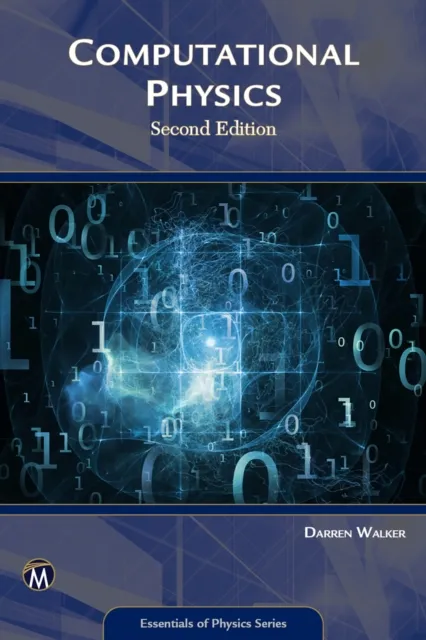
Computational Physics
A Comprehensive Guide to Numerical Methods in Physics

Discover the essential numerical methods for solving complex physical problems with this comprehensive guide to computational physics.
Key Features
Comprehensive coverage of essential numerical methods
Practical coding examples and exercises for hands-on learning
Insights into high-performance computing techniques
Book Description
This updated edition introduces computational physics for performing experiments on the computer. It provides a grounding in scientific programming with examples in the context of physics problems. Using C++ as the primary language, it covers interpolation, integration, and solving differential equations, from simple concepts to advanced topics. The book includes a chapter on high-performance computing and parallel programming.
Understanding computational physics is crucial for data manipulation and real-world simulations. The book starts with introductory topics and progresses to advanced material, including a C++ library and sample programs. Readers will learn problem-solving methods and constructing models.
This journey equips readers with skills for scientific tasks, demonstrating efficient problem-solving and model construction. The practical approach ensures users can apply these concepts in real-world scenarios, making it an essential resource for those interested in computational physics.
What you will learn
Understand the fundamentals of coding for physics simulations
Master interpolation and data fitting techniques
Apply numerical methods for solving differential equations
Explore Fourier Analysis and Monte Carlo methods
Implement advanced numerical quadrature
Leverage high-performance computing for large-scale simulations
Who this book is for
Ideal for students, educators, and professionals in physics and engineering who seek to deepen their understanding of computational methods. A basic understanding of calculus, linear algebra, and programming is recommended.