£45.00
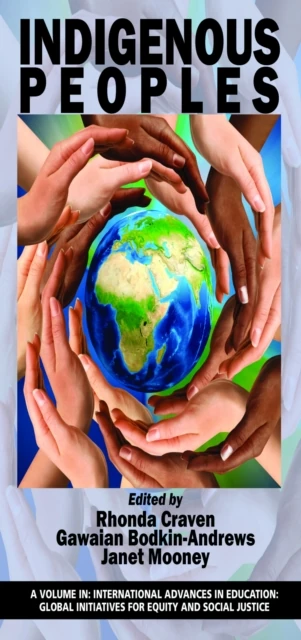
Comparative International Perspectives on Education and Social Change in Developing Countries and Indigenous Peoples in Developed Countries

Democratizing educational access and building capacity in developing countries and amongst indigenous peoples in developed countries may be elusive but are hopeful goals.
Many developing countries are striving to reengineer their incoherent education systems at a time when they are most vulnerable, particularly with susceptibility to natural disasters, political unrests, and economic instabilities (UNESCO, 2007). Similarly, indigenous peoples in developed countries are seeking more control over education as they consider the long-term effects of educational policies that have been forced on them.
Research on education and social change in developing countries has a long history (Glewwe, 2002; Hanushek, 1995; Sider, 2011). However, there is limited research on educational capacity-building in developing countries such as Kenya, Honduras, Haiti, Ghana, Hong Kong, India, Peru, China, and Thailand. Further, the educational frameworks by which Indigenous peoples (Maori, Canada's First Nations, and American Indian/Alaska Natives) have been educated have some significant similarities to those encountered in developing countries.
The compilation of chapters illuminates research and collaborative initiatives between the authors and local leaders in developing countries' and Indigenous peoples in developed countries' efforts to solve the complexity of social inequities through educational access and quality learning. The authors draw on theoretical lens, knowledge bases, and strategies, and identify trends and developments to provide the scope of educational improvement in a globalization context (Brooks & Normore, 2010; Jean-Marie, Normore & Brooks, 2009).