£39.99
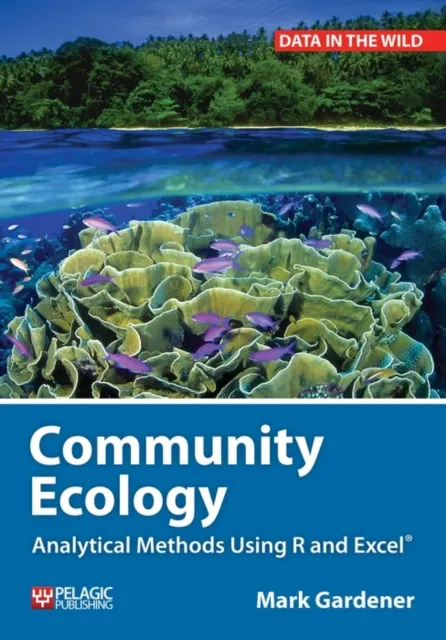
Community Ecology
Analytical Methods Using R and Excel

Interactions between species are of fundamental importance to all living systems and the framework we have for studying these interactions is community ecology. This is important to our understanding of the planets biological diversity and how species interactions relate to the functioning of ecosystems at all scales. Species do not live in isolation and the study of community ecology is of practical application in a wide range of conservation issues.
The study of ecological community data involves many methods of analysis. In this book you will learn many of the mainstays of community analysis including: diversity, similarity and cluster analysis, ordination and multivariate analyses. This book is for undergraduate and postgraduate students and researchers seeking a step-by-step methodology for analysing plant and animal communities using R and Excel.
Microsoft's Excel spreadsheet is virtually ubiquitous and familiar to most computer users. It is a robust program that makes an excellent storage and manipulation system for many kinds of data, including community data. The R program is a powerful and flexible analytical system able to conduct a huge variety of analytical methods, which means that the user only has to learn one program to address many research questions. Its other advantage is that it is that it is open source and therefore completely free. Novel analytical methods are being added constantly to the already comprehensive suite of tools available in R.
Mark Gardener is both an ecologist and an analyst. He has worked in a range of ecosystems around the world and has been involved in research across a spectrum of community types. His knowledge of R is largely self-taught and this gives him insight into the needs of students learning to use R for complicated analyses.